
REVIEW · TOKYO
Tokyo: Locals´ Secret Food Tour // Eat like a Japanese
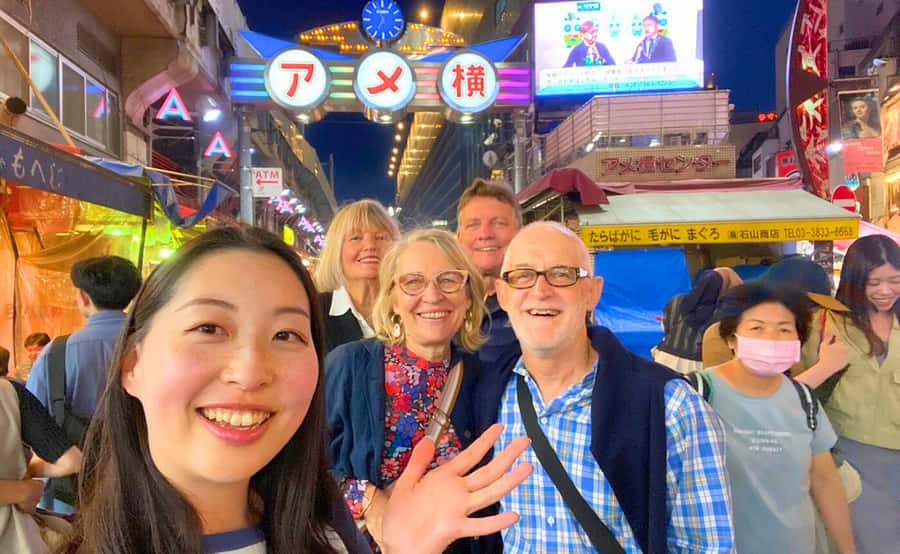
Ueno is one of the better parts of Tokyo for a food tour because it feels lived-in rather than staged for sightseeing. This three-hour evening moves from station sushi to gyoza, yakitori, and chicken ramen, with a guide helping you order and explaining the customs along the way.
I like two things here: the tiny group, limited to five, and the relaxed pace. Guides such as Kana, Lina, Tatsuya, Suzu, and Nobu have been praised for answering questions, offering Tokyo tips, and making the night feel like dinner with a friend. The main drawback is that vegetarian, vegan, and gluten-free diners cannot be accommodated, and popular restaurants may involve a wait.
Key points at a glance
- Four distinct food stops: Sushi, gyoza, yakitori, and chicken ramen make this a broad introduction to everyday Japanese eating.
- A very small group: With no more than five participants, ordering and conversation should be easier than on a large food walk.
- Ueno after dark: You explore a local eating district around JR Ueno Station rather than sticking to Tokyo’s biggest tourist sights.
- Drinks are part of the meal: Beer, cocktails, soft drinks, sake, and plum wine are available, depending on your booking choice.
- Useful help for first-time diners: Your English- or Japanese-speaking guide can explain food customs and help you feel more at ease in small restaurants.
- Important restrictions: The tour is for adults and is not suitable for wheelchair users, pregnant women, vegetarians, vegans, or people needing gluten-free meals.
Why Ueno works for a Tokyo food night
Many first-time visitors build their food plans around famous neighborhoods such as Shibuya, Shinjuku, or Ginza. Ueno gives you a different picture. It is a major station district with a strong local eating and drinking culture, and this tour focuses on places away from the most obvious sightseeing circuit.
That matters because Japanese food is not only about headline dishes or polished restaurants. A small sushi counter, a busy gyoza shop, an izakaya, and a compact ramen place show you how ordinary evenings can unfold in Tokyo. You get variety without spending the whole night crossing the city.
The route begins and ends inside the JR Ueno Station building, near the Central Gate and close to Andersen bakery and the Hard Rock Cafe entrance. Look for the large area map. This is a useful meeting point, but stations in Tokyo can still be confusing, so arrive with enough time to find the correct gate.
The tour lasts three hours and is offered at different starting times depending on availability. Since the restaurants may be busy, you should not treat the end time as a precise minute-by-minute promise. Waiting in line is part of the evening at popular Japanese restaurants, and the tour specifically warns you to expect it.
More food tours with drinks in Tokyo:
- Rome: Trastevere Food tour with Free-Flowing Fine Wine
★ 5.0 · 2,853 reviews - Madrid: Tapas Food Tour with Drinks and Food
★ 4.9 · 651 reviews - Bermuda Food Tour: Eat, Drink and Explore
★ 5.0 · 394 reviews
First stop: three kinds of sushi near Ueno Station
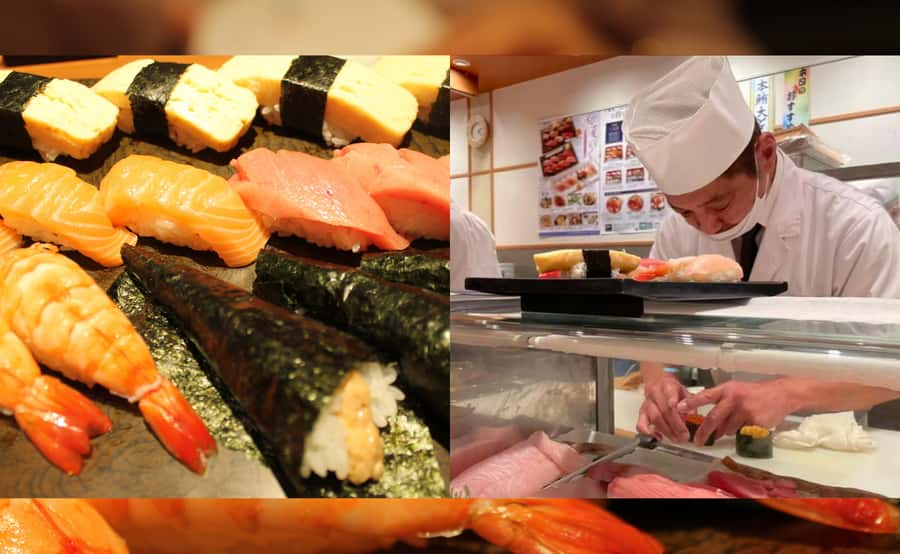
The opening meal is sushi at a local restaurant inside Ueno Station. The fish is sourced from the market each morning, and the included tasting covers three different types of sushi with green tea.
This is a smart first stop. Sushi can feel intimidating when you are unsure how to order, what each piece is, or how quickly the meal should move. With a guide beside you, you can concentrate on the taste instead of trying to decode the room.
The station setting also tells you something about Tokyo food culture. Not every good meal requires a special journey to a famous neighborhood. Some of the city’s most useful restaurants sit in or near transport hubs, serving people on their way to work, home, or an evening out.
Do not expect this stop to be a long sushi lesson. The food portion is listed at about 40 minutes, and the larger point is to begin with a familiar Japanese favorite before moving into less familiar settings. Green tea is included, while alcohol is part of later stops rather than this first tasting.
Second stop: gyoza in a lively local restaurant
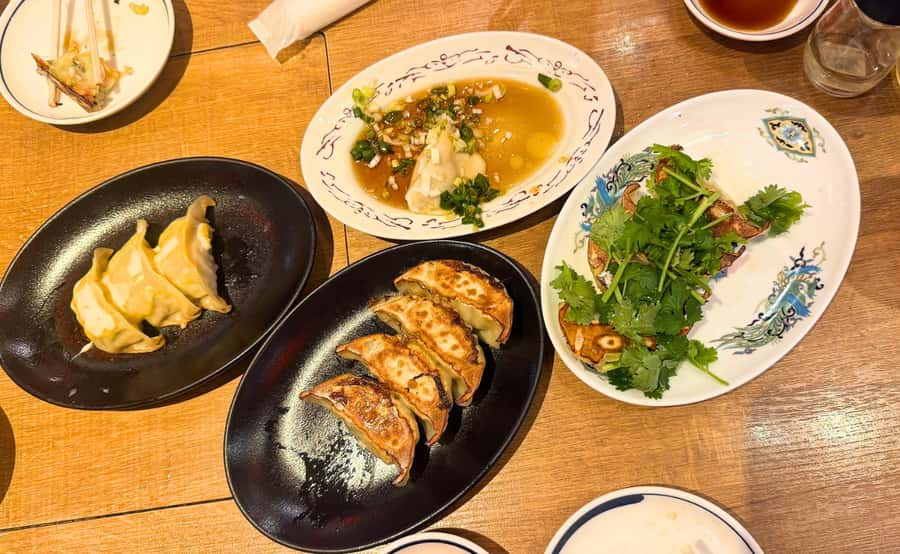
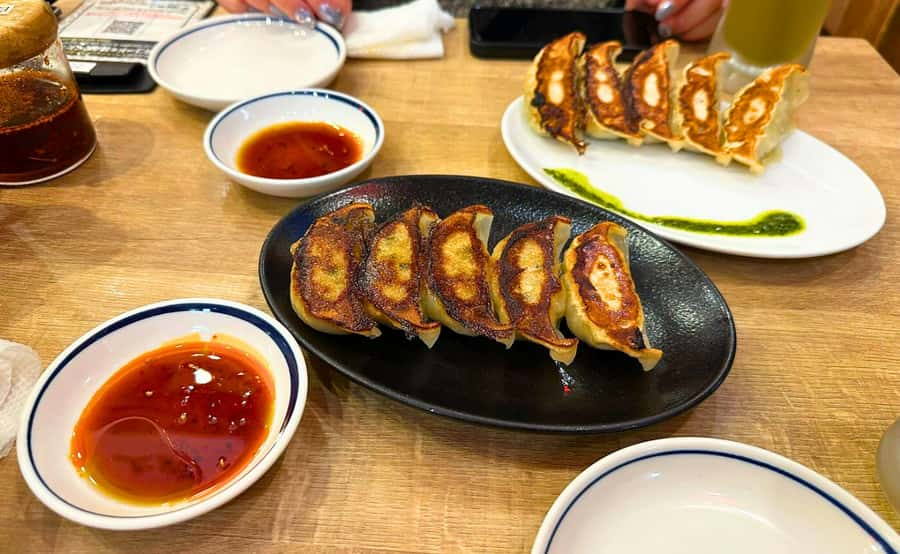
Next comes gyoza, the pan-fried Japanese dumpling that appears in casual restaurants across the country. You can choose between one and four flavors, with water included.
Gyoza is an everyday food rather than a ceremonial dish. That makes it a useful introduction to casual Japanese dining. The restaurant’s lively atmosphere is part of the appeal, and you get a chance to see how a simple dish can support a full meal or a night of drinks.
The choice of flavors gives you some control, although the available options are determined by the restaurant. If you are new to Japanese food, this is an easy place to ask your guide about fillings, sauces, and the best way to eat the dumplings.
The 40-minute stop should give you time to eat without turning the evening into a rushed series of samples. Still, four stops in three hours means portions are designed for tasting, not for ordering everything on the menu. You should arrive hungry, but not expect one large restaurant meal at every stop.
Third stop: yakitori and an izakaya evening
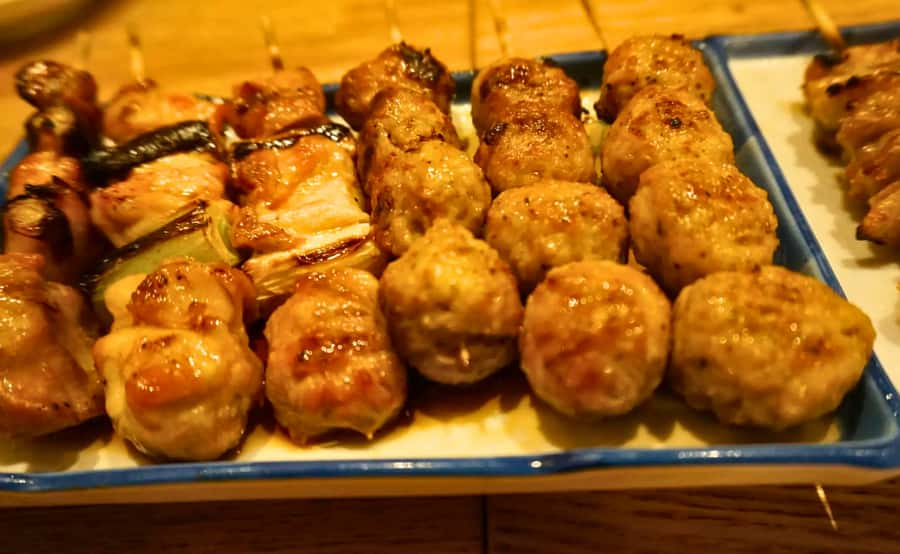
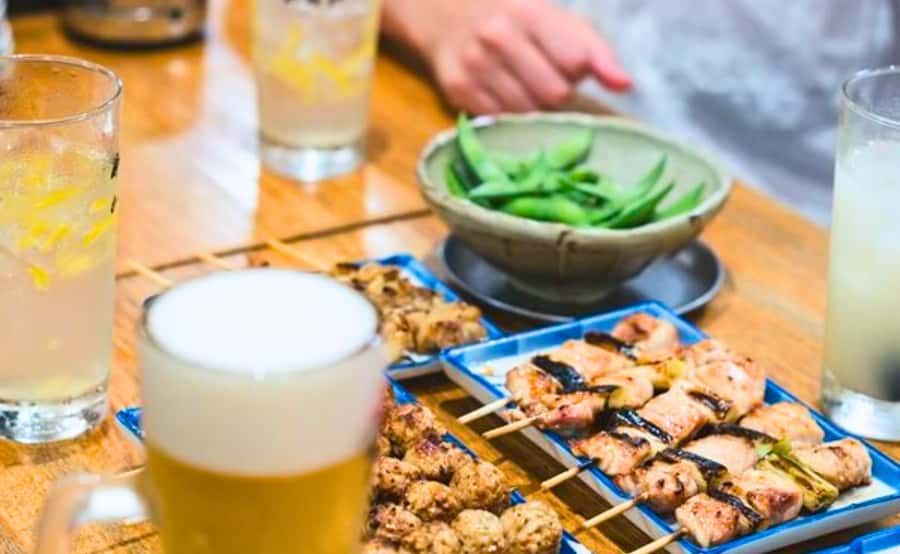
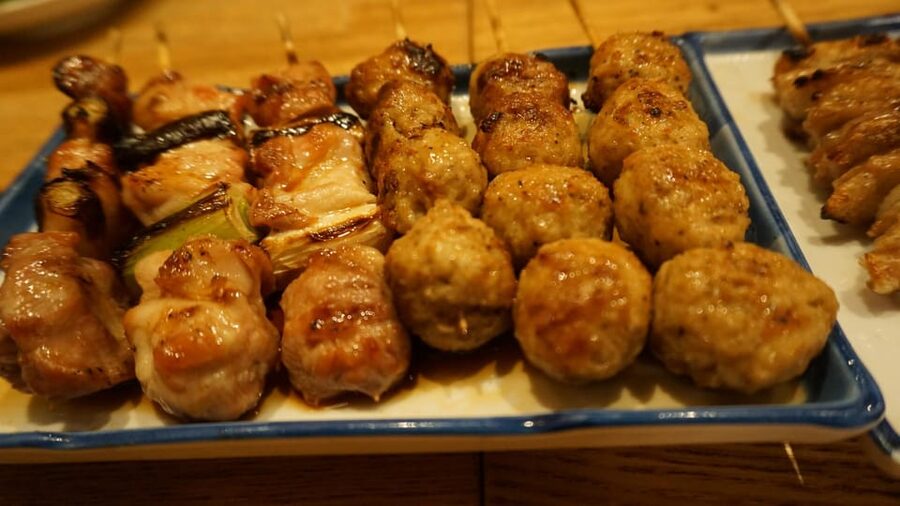
The yakitori stop brings you into an izakaya, a Japanese-style pub where food and drinks are ordered together. You receive three types of chicken skewers and can choose an alcoholic or soft drink.
Yakitori is a good match for this setting. The skewers are casual, easy to share, and closely linked with Japan’s after-work drinking culture. This is also the point where the evening becomes more social, with a choice of more than 50 alcoholic and nonalcoholic drinks.
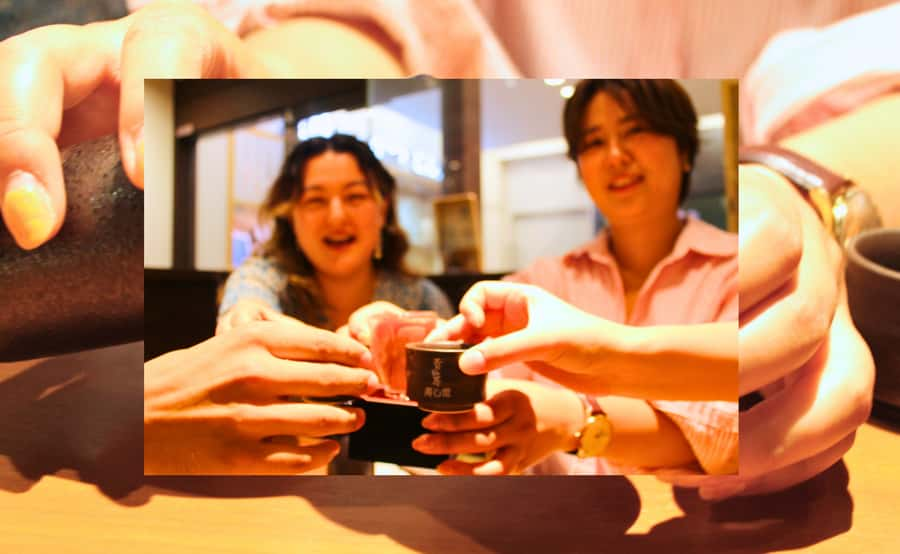
The recommended Yuzu Sour combines yuzu liqueur with sparkling water. If you prefer not to drink alcohol, the tour includes a soft-drink option. The standard inclusions mention beer and cocktails at the restaurant stops, while sake and plum wine are available if you select the Extra Alcohol Package.
That package deserves a careful look when you book. The basic tour already includes a drink with the yakitori, but sake and plum wine are listed separately. If trying traditional Japanese drinks is a major reason for booking, check that the extra option is selected and that its price is clear before paying.
The izakaya is likely to be one of the most memorable parts for anyone curious about ordinary Tokyo nights. It is not presented as a formal tasting room. Instead, you sit, eat, drink, and ask questions while the guide explains what is happening around you. Guides including Kana, Lina, and Tatsuya have been singled out for making conversation easy and helping people feel comfortable.
Same city, a completely different kind of round:
- Tokyo Bar Hopping Tour in Shinjuku (All-You-Can-Drink + Dinner)
★ 5.0 · 3,587 reviews - Shibuya Meltdown Nightlife Tour: All-You-Can-Drink Bar Hopping
★ 5.0 · 1,058 reviews - Tokyo: Pub Crawl and Bar Tour
★ 4.5 · 951 reviews - Tokyo: Shinjuku Bar Hopping with All-You-Can-Drink & Dinner
★ 4.9 · 440 reviews
Final stop: chicken ramen with a careful broth
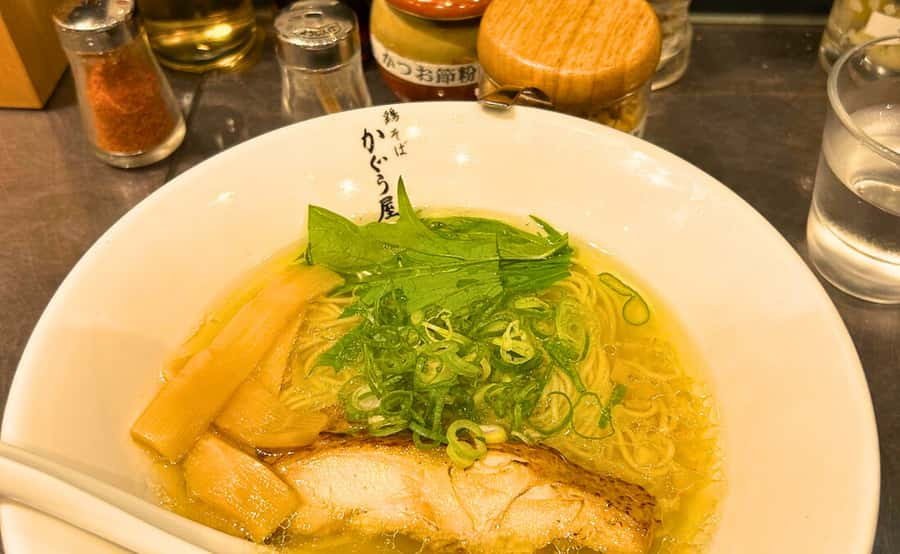
The tour finishes at a small ramen shop serving chicken soba, with water included. The broth is made with Oyama chicken, fresh vegetables, and Hidaka kelp. It is slow-cooked and strained twice for a smooth, full flavor.
This is not simply a final bowl added to fill the schedule. Ramen gives the evening a proper finish, and the chicken-based broth offers something different from the sushi, dumplings, and grilled skewers. The experience information also notes mazesoba as a possible style encountered on the tour. Mazesoba is a brothless mixed noodle dish, so the exact ramen preparation may vary depending on the restaurant and availability.
That point is worth keeping in mind. Food tours sometimes need to adjust restaurant choices, dishes, or timing, especially when the places are popular. You should expect the general food plan to remain the same, but not assume that every bowl will match a photograph or a fixed menu description.
The final stop is also useful for people who are still learning how Tokyo noodle shops work. Your guide can help you understand the setting and ordering process, while you focus on the noodles and broth. By this stage, you will have tried several forms of casual eating, from standing or station-style food culture to pub dishes and ramen.
What the small group changes
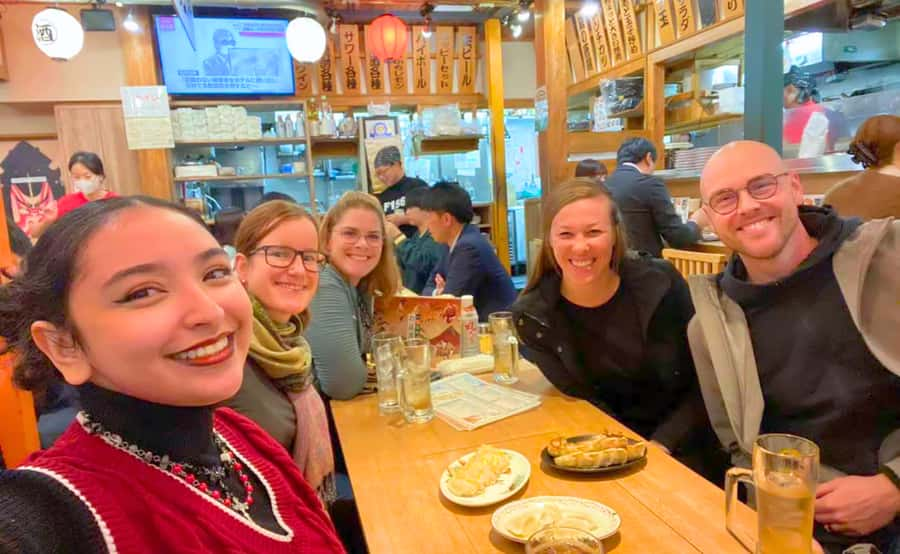
A maximum of five participants is one of the tour’s strongest practical features. Small restaurants can be tight, and a compact group is less awkward than a large crowd moving from table to table.
You also get more room to ask questions. The guides speak English and Japanese, and the strongest guide feedback centers on personal attention. Kana is described as helpful with local advice and even train directions. Lina is noted for answering questions about daily life in Japan. Tatsuya is described as friendly and fun, while Suzu and Nobutane are also praised for their warm, helpful approach.
Guide assignments can change, so you should not book on the assumption that one specific person will lead your date. Still, the repeated pattern is useful: this works best when you want conversation and practical help, not a scripted lecture.
The small group also suits solo visitors. Eating in a tiny Japanese restaurant alone can feel awkward if you do not know the rules or menu. Here, you have a built-in table companion and someone to help bridge the language gap. Couples and friends can also benefit, particularly if one person is nervous about ordering unfamiliar food.
The value of $95 for three hours
At $95 per person, this is not the cheapest way to eat four casual dishes in Tokyo. You are paying for more than the food. The price includes a guide, access to local restaurants, ordering support, cultural explanation, and the convenience of moving through four stops without planning each one yourself.
The included food is substantial for a tasting walk: three types of sushi with green tea, gyoza with water, three types of yakitori with a drink, and ramen with water. Depending on portion sizes, you may finish comfortably full rather than stuffed. The tour does not include transportation, but the route begins and ends at the same Ueno Station meeting point, so there is no paid transfer built into the evening.
I see the best value for first-time visitors who would otherwise spend hours choosing restaurants and worrying about menus. It is less compelling for an experienced Tokyo diner who already knows Ueno, can order confidently, and prefers to choose every dish independently.
The Extra Alcohol Package may change the total cost. Sake and plum wine are included only when that option is selected, so compare the booking choices carefully. The reserve-now, pay-later option and free cancellation up to 24 hours before departure add flexibility, but you should still check the final terms at booking.
Who should book, and who should skip it
This tour suits an adult who wants a friendly introduction to Japanese food in one evening. It is especially useful if you are visiting Tokyo for the first time, traveling alone, or unsure how to enter and order at small local restaurants.
You should also consider it if you value conversation over sightseeing. The route is about food, drinks, and neighborhood atmosphere, not major landmarks. The guide’s local advice can help you make better choices for the rest of your time in Tokyo.
The restrictions are important. The activity is not suitable for children under 18, pregnant women, wheelchair users, vegetarians, vegans, or people requiring gluten-free food. The food plan includes fish, chicken, and alcoholic drink options, and no alternative dietary program is offered.
People who dislike waiting should think twice. Popular restaurants can have lines, and the tour treats that wait as part of Japanese dining culture. If you prefer a fixed schedule and a quiet meal, a private restaurant booking may suit you better.
Practical tips for a smoother evening
Arrive at the JR Ueno Station meeting point early. The group gathers outside the Central Gate near the large area map, close to Andersen bakery and the Hard Rock Cafe entrance. The tour ends at the same place, which makes the return simple.
Wear comfortable shoes. The route includes several restaurant visits and movement through a busy station and neighborhood, even though exact walking distances are not provided.
Eat lightly beforehand, but do not arrive starving. Four stops include real food, and the mix of dumplings, skewers, noodles, and sushi can be filling. If you want the Extra Alcohol Package, pace yourself because the evening includes several opportunities to drink.
Bring an open mind about restaurant style. A local izakaya or ramen shop may be compact and energetic rather than polished and spacious. The point is to see how people eat in everyday Tokyo settings.
Keep your schedule flexible after the tour. Lines can affect timing, and the group may spend a little longer at a stop if the restaurant is busy. The guides are there to keep the evening moving, but this is not a timed museum visit.
FAQ
Where does the food tour meet?
The group meets inside the JR Ueno Station building, just outside the JR Central Gate, near the large area map and close to the Hard Rock Cafe entrance. The meeting point is across from the Andersen bakery.
Where does the activity finish?
The tour ends back at the same JR Ueno Station meeting point.
What food is included?
You receive three types of sushi with green tea, gyoza with water, three types of yakitori with an alcoholic or soft drink, and ramen with water.
Is alcohol included?
An alcoholic or soft drink is available with the yakitori stop. Sake and plum wine are included only if you select the Extra Alcohol Package.
Can vegetarians, vegans, or gluten-free diners join?
No. The tour cannot accommodate vegetarian, vegan, or gluten-free dietary preferences.
What languages are available, and how large is the group?
Live guiding is available in English and Japanese. The group is limited to five participants.
Should you book this Ueno food tour?
Book it if you want a low-stress introduction to Tokyo food, especially if you are traveling alone or feel unsure about small local restaurants. The combination of sushi, gyoza, yakitori, drinks, and ramen gives you a useful first taste of several everyday food settings, while the small group leaves room for questions.
Skip it if you need vegetarian, vegan, gluten-free, or wheelchair-accessible arrangements, or if you want complete control over every dish and restaurant. For everyone else, $95 is a reasonable price for four food stops, a local guide, and a social evening in Ueno, provided you understand that restaurant lines and changing dish details are part of the deal.
Just added around Tokyo
- Tokyo: Shinjuku Golden Gai Bar Hopping Night Tour★ 4.4 · 8 reviews
- Tokyo:Shinjuku Ni-chome LGBTQ+ Bar Hopping Tour with Guide★ 5.0 · 2 reviews
- Tokyo: Shinjuku Nightlife Tour with Karaoke and Bar Hopping★ 4.1 · 4 reviews
- Tokyo: Shinjuku Izakaya and Golden Gai Bar Hopping Tour (2h)★ 4.9 · 67 reviews
- Tokyo: Shinjuku Bar Hopping & Karaoke Night Tour★ 4.9 · 19 reviews
- Tokyo: Shinjuku Golden Gai Bar Hopping that only locals know★ 5.0 · 5 reviews
- Tokyo Pub Crawl: Unique Japanese Drinks in Shimokitazawa★ 5.0 · 7 reviews
- Tokyo: Shinjuku Bar Hopping & Night Walking Tour★ 4.6 · 137 reviews
Tokyo Boozy Tours, compared.
Tokyo Bar Hopping Tour in Shinjuku (All-You-Can-Drink + Dinner)
Read our review →
Shibuya Meltdown Nightlife Tour: All-You-Can-Drink Bar Hopping
Read our review →
Shinjuku Bar Hopping with All-You-Can-Drink & Dinner
Read our review →
All We Can Drink and Make Friend Can Come Alone Party in Shinjuku
Read our review →
Tokyo Dinner Cruise & Tradition Show & Drinks & Tokyo Tower
Read our review →

3-Hour Tokyo Pub Crawl Nightlife Welcome Guided Tour in Shibuya
Read our review →Browse the lists this tour appears in