
REVIEW · PARTY BUSES AND BEER BIKES
Nairobi: Party bus(matatu) adventure experience
Nairobi’s party matatus turn an everyday commute into a rolling music venue. This 210-minute experience lets you compare a calm city bus with a decorated, loud, privately run party bus, while walking through the CBD and hearing how Nairobi’s transport culture developed.
I like the local transport focus, which puts you beside ordinary commuters instead of keeping you inside a sightseeing vehicle. I also like the private-group format and flexible guides, especially for families or small groups. The main concern is safety: one recorded outing ended early after a minor collision, and another rating specifically questioned security.
Key things to know before you go
- Start at KICC: Meet at the entrance of the Kenyatta International Convention Centre, opposite the Nairobi Governor’s office.
- Compare two bus worlds: A regular city bus offers practical commuting, while a party matatu brings loud music, art, and a festive mood.
- Expect a real local ride: You wait for the selected bus to fill with ordinary passengers, rather than boarding a vehicle reserved only for your group.
- Choose from Nairobi routes: The experience may include Westlands, Ngong Road, or Eastlands, depending on the day and available party matatu.
- Carry extra Kenyan shillings: Bus fares are not included. The activity information lists 500 KES, while one outing paid 100 KES per person each way.
- Keep the schedule flexible: A minor road incident caused one group to return early by normal matatu, so this is better for adaptable visitors than for anyone needing a tightly controlled tour.
Why Nairobi’s matatus are worth seeing
In many cities, public transport is simply the way you get from one sight to another. Nairobi adds a strong visual and musical identity to the experience. Privately owned matatus can carry bold graphics, large sound systems, and themed interiors. The party bus version pushes those features further, turning a daily vehicle into entertainment.
That contrast is the central idea here. You do not only ride a decorated bus. You see how the same city supports two very different transport moods. A regular bus is built for getting people to work and home. A party matatu is designed for atmosphere, music, and special occasions.
I find that useful because it gives you a better read on Nairobi than a standard sightseeing loop. The city’s transport system is not separate from its urban culture. It shows how residents use design, music, and business sense to make ordinary routines more expressive.
The experience also explains the growth of party buses and their effect on local work. Drivers, DJs, artists, and event planners all find opportunities in this corner of Nairobi’s entertainment trade. You can see the buses as transport, but also as moving advertising, public art, and nightlife venues.
More party buses and beer bikes in the world:
- Aruba Happy Hour Party Bus Pub Crawl
★ 4.5 · 741 reviews - Aruba Nightlife Party Bus with Unlimited Drinks & DJ on Road Jam
★ 5.0 · 425 reviews - Las Vegas: Club Crawl by Party Bus w/ Free Drinks
★ 4.2 · 138 reviews
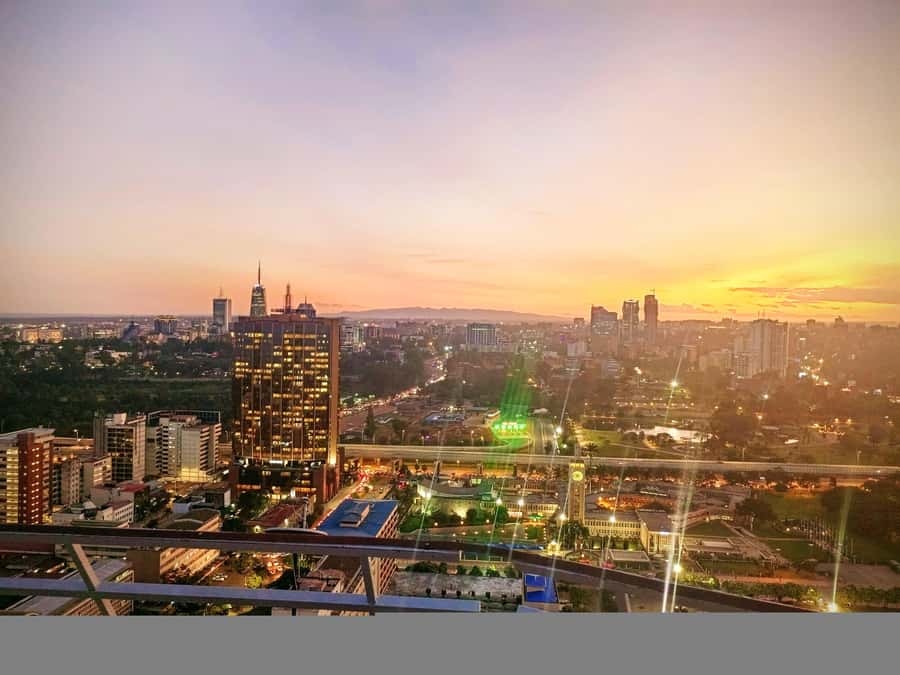
Meeting at KICC in the Nairobi CBD
The tour begins at the Kenyatta International Convention Centre, a sensible central meeting point. Look for the entrance opposite the office of the Governor of Nairobi. Since the CBD has several entrances and plenty of foot traffic, contact Tour Guru Kenya if you have booked a late departure or have not received a response.
Your guide meets you there and leads the opening walk through central Nairobi. The city portion matters. You are not simply handed a ticket and sent onto a bus. The guide helps explain what you are looking at, points out the different types of public transport, and sets up the comparison between normal buses and party matatus.
The listed service is in English, with a live guide and a private group. That does not mean you will have a private party bus. You may share the actual vehicle with local passengers, as one small group discovered. The private part refers to the arrangement with your guide, not necessarily exclusive use of the bus.
If you want to visit the KICC itself or go to its viewing area, budget an extra entry fee. That charge is not included, though payment by card is available. The main bus experience does not depend on entering the building, so you can treat this as an optional add-on.
The first comparison: ordinary city bus travel
The first ride is intended to show the practical side of Nairobi transport. City buses such as Citi Hoppa and Super Metro are used for everyday commuting. Their mood is quieter and more structured, with passengers focused on getting to work, shopping, or another part of the city.
This is an important part of the activity. If you only ride the party matatu, the music and decoration can seem like the whole story. Riding a regular bus first gives you a baseline. You can then notice the difference in sound, seating, design, passenger behavior, and purpose.
The route may take you toward Westlands, a major commercial area. The information provided does not promise a fixed stop-by-stop route, so you should not book this expecting a precise set of landmarks. The value is the transport comparison and the guided explanation, not a checklist of monuments.
You will pay your own bus fare. The activity details list 500 KES, but the cost described for one outing was 100 KES per person for a ride of roughly 20 to 30 minutes in one direction, with the same amount expected on the return. A short local matatu ride back toward KICC cost 20 KES per person on that occasion.
That difference is worth clarifying before you leave. Ask the guide what fare is expected for your route, and carry small notes or coins. Do not assume the advertised tour price covers every transport payment.
Picking out the party matatu
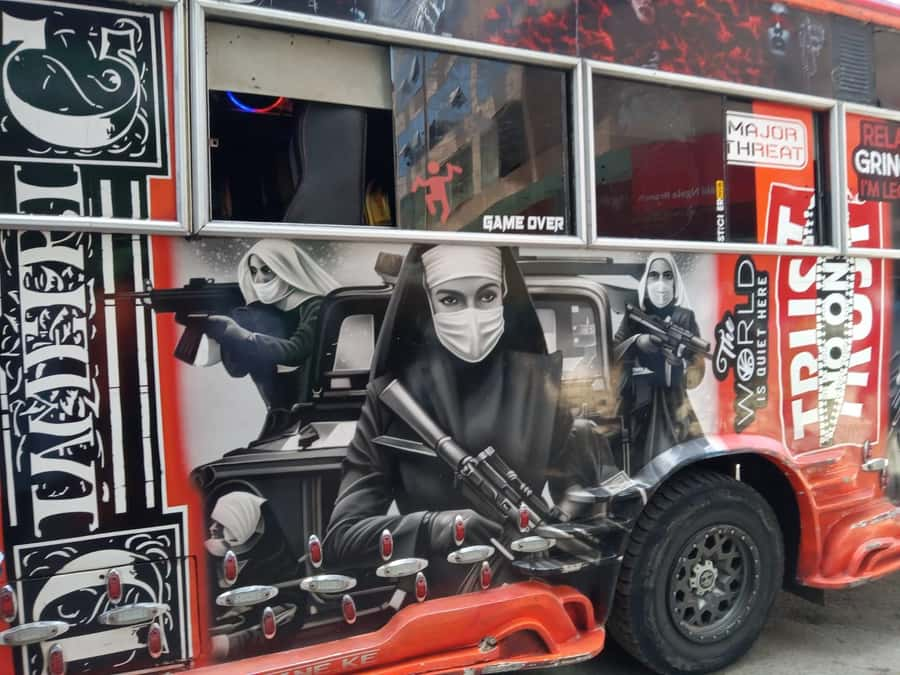
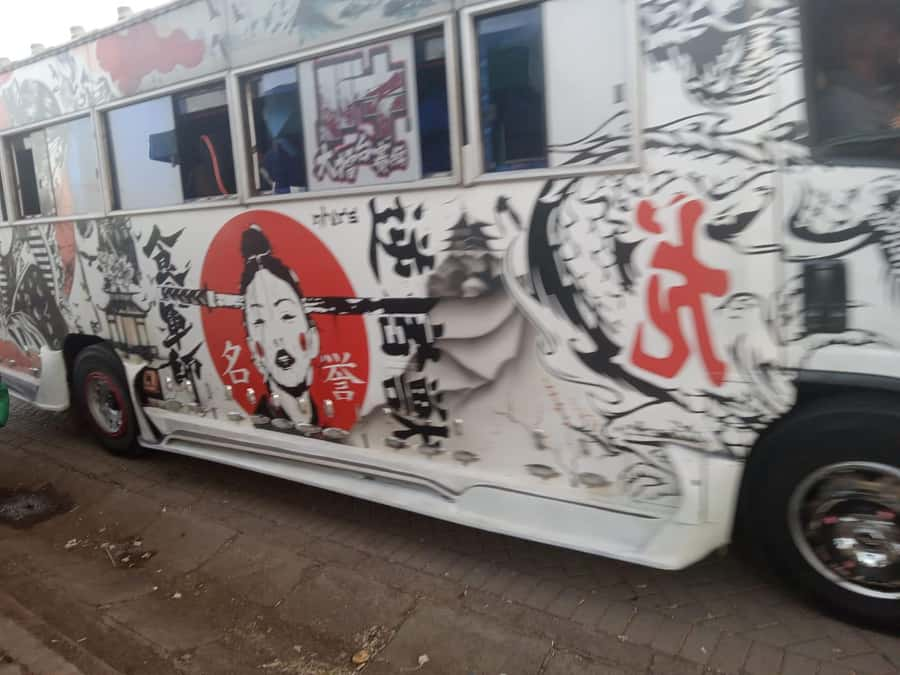
After the regular bus comparison, the focus shifts to Nairobi’s decorated matatus. This is where the experience becomes more visual and more social. Party matatus are known for loud music, striking artwork, and a stronger connection to nightlife and events.
The guide helps you look at the buses before choosing one. The point is not only to board the first vehicle available. You get a chance to see the art and sound systems that set these vehicles apart from ordinary city buses.
You may need to wait while the bus fills with other passengers. That is a useful detail to understand before booking. This is not a private charter where everyone boards at a fixed time and departs immediately. The bus still works as public transport, so the timetable depends on local demand.
For some people, that waiting period is part of the appeal. You are seeing the system operate as it really does. For others, particularly families with young children, it may feel less polished than a standard sightseeing tour.
The party bus itself can be loud. If you prefer a quiet ride or have children who are sensitive to noise, ask about the expected sound level. The supplied information describes music and artistic flair as central features, so you should treat the bus as entertainment rather than a calm scenic transfer.
Same city, a completely different kind of round:
- Amsterdam Classic Saloon Boat Cruise with Drinks and Cheese
★ 5.0 · 31,825 reviews - Amsterdam Luxury Canal Cruise + Unlimited Drinks & Bites option
★ 5.0 · 30,518 reviews - Amsterdam: Heated Canal Cruise with Unlimited Drinks & Bite
★ 4.5 · 21,431 reviews - Prague: Medieval Dinner with Unlimited Drinks
★ 4.4 · 19,847 reviews
Ngong Road and Eastlands: two sides of the ride
The experience presents routes including Ngong Road and Eastlands. Each route helps place the party matatu culture in a different part of the city, though the exact sequence is not guaranteed.
Ngong Road is presented as the creative route. Here, the attraction is the mix of movement, street life, and the visual style of Nairobi’s urban transport. You might find the route most useful if you want to see how the city’s creative energy appears outside the central business district.
Eastlands is described as the heart of matatu culture. This route gives the bus itself a bigger role in the experience. The artwork, music, and local commuting patterns become the subject, rather than background decoration.
The guide’s commentary is important on both routes. Without explanation, a decorated bus is easy to treat as a quick photo stop. With context, you can understand the vehicle as part of Nairobi’s economy and public culture.
Do keep your expectations realistic. The provided itinerary includes photo stops, walks, guided sightseeing, and visits, but it does not name every stop or promise a fixed attraction at each point. Your route can depend on traffic, the available bus, and how the local service is running that day.
What the guide adds to the experience
A good guide is especially useful here because transport culture can be hard to interpret from the pavement. The guide explains the history of Nairobi’s bus system, points out the difference between ordinary buses and party matatus, and helps you understand why the vehicles look and sound so different.
The service includes professional guides and security, along with bottled water. The guide can also help with the practical parts: finding the right stage, choosing a bus, handling the walk through the CBD, and adjusting the plan if the ride changes.
The small-group setup can work well. One recorded booking involved three visitors and two guides, rather than a large group. That meant the guides could adjust the plan when the ride did not go as expected. If you value personal attention, this format is a plus.
Still, do not expect the guide to remove every uncertainty. You are entering a working public transport system. Departure times, crowd levels, route choices, and vehicle availability may shift.
Safety, road conditions, and the minor crash concern
This is the part I would take most seriously. One outing ended after the matatu was involved in a minor collision with another car about ten minutes into the ride. The group, which included two children, decided to return to KICC. The guides helped them switch to a normal matatu, and the return ride took around five to ten minutes.
A second posted rating gave the activity three out of five and raised a general concern about visitor security. There is not enough information to judge how often problems occur, but the account is enough to show that this is a real road experience, not a controlled theme-park ride.
The tour includes security, but that should not be read as a guarantee against traffic incidents. Use normal city awareness. Keep your belongings close, follow the guide’s instructions, and tell the guide if you are uncomfortable with the bus, the noise, or the road conditions.
Families should think carefully about the choice. The flexible guides were able to change the plan for one family, which is reassuring. At the same time, young children may find a loud, crowded, fast-moving bus stressful.
You are not allowed to bring drones, alcohol, or drugs. Feeding animals is also prohibited, though animals are not described as a planned part of the outing.
Is $32 a fair price?
At $32 per person, the experience is not priced like ordinary public transport. The bus fare itself may cost only a small amount, and food and drinks are not included. You are paying for the guide, planning, explanations, bottled water, and the chance to compare several forms of transport with a private group.
I think the price can make sense if you want help navigating Nairobi’s bus culture without working out the stages and routes yourself. The guide gives the ride a clear purpose and adds context that you would probably miss on your own.
The value is weaker if you simply want a party bus ride. Since you may wait for local passengers and may not have exclusive use of the vehicle, you are not buying a private entertainment charter. You are buying access and interpretation within the city’s normal transport system.
Set aside extra money for fares, optional KICC entry, and any food or drinks. The booking information lists 500 KES for bus fare, but the actual fare can vary by route. Confirm this before setting out.
Who will enjoy this, and who should skip it?
I would recommend this for adults and older children who enjoy street-level city experiences, music, public transport, and local urban culture. It suits people who would rather understand how Nairobi moves than spend three hours inside a standard sightseeing van.
It is also a good fit for photographers, though you should be respectful when taking pictures of passengers and drivers. The decorated buses offer strong visual material, while the CBD walks add context.
I would be cautious about booking it for very young children, anyone with limited tolerance for loud music, or anyone who needs a fixed schedule. It may also be a poor fit if road safety is your main concern or if you expect a fully private bus.
The cancellation terms are helpful: you can cancel up to 24 hours ahead for a full refund, and you can reserve now and pay later. Those options reduce the risk of committing too early, but they do not change the basic nature of the activity.
My verdict: book it for the culture, not the polish
Book this experience if you want a guided look at Nairobi’s unusual bus culture and are happy to accept local transport conditions. The regular-bus comparison, CBD walk, decorated matatu, and flexible private-group format give it a clear purpose.
Skip it if you want guaranteed security, a fixed route, quiet transport, or a private party vehicle. At $32, the price is fair for guided access and explanation, but less convincing if all you want is a short music-filled ride.
If you go, meet at KICC with extra cash, keep your plans loose, and ask the guide to confirm the route and fares before boarding. That preparation will help you enjoy the creative side of Nairobi’s matatus without mistaking a working public bus for a controlled tour attraction.
FAQ
Where does the Nairobi party matatu experience begin?
Meet at the entrance of the Kenyatta International Convention Centre, opposite the office of the Governor of Nairobi.
How long does the experience last?
The activity lasts 210 minutes, or three and a half hours. Starting times depend on availability.
What language is the tour conducted in?
The live tour guide speaks English.
Is the group private?
Yes. The booking is described as a private-group experience. The actual matatu may still carry local passengers because it operates within the public transport system.
Is bus fare included in the $32 price?
No. Bus fare is not included. The activity information lists 500 Kenyan shillings, while a recorded outing paid 100 KES per person for each longer ride and 20 KES per person for a short return ride. Confirm the fare with the guide.
Is entry to the Kenyatta International Convention Centre included?
No. Entry to KICC is separate, and you can pay by card.
What is included in the activity?
A professional guide, bottled water, and security are included. Food, drinks, bus fare, and KICC entry are not included.
Can I cancel the booking?
You can cancel up to 24 hours in advance for a full refund. You can also reserve now and pay later.
What is not allowed?
Drones, alcohol, drugs, and feeding animals are not allowed.
Just added around the world
- Cancun: Private Catamaran with Open Bar & Snorkeling Option★ 4.5 · 10 reviews
- Luxury Sunset Sailing Cruise in Cancun with Light Dinner and Open Bar★ 4.5 · 82 reviews
- Cancun 4 hour Private Yacht Experience with Lunch and Open Bar Onboard★ 5.0 · 15 reviews
- Splendid Isla Mujeres Catamaran: drinks and fun all day!★ 5.0 · 5 reviews
- Live a Romantic Night Cruise Dinner at COLUMBUS (open bar included)★ 4.0 · 4 reviews
- Cancun Private Catamaran Cruise– Open Bar & Snorkeling Experience★ 5.0 · 6 reviews
- 2 Island Adventure: Contoy & Mujeres with Snorkeling & open bar★ 4.5 · 6 reviews
- Pirate Ship Jolly Roger with Dinner and Open Bar★ 5.0 · 5 reviews
Party Buses and Beer Bikes, compared.
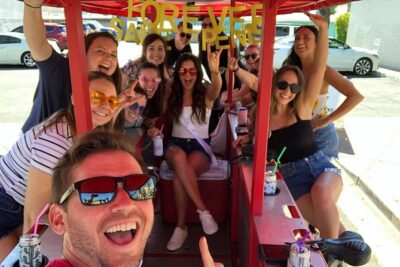
Party Bike Private Party Up To 14 People in Old Town Scottsdale
Read our review →
Istanbul Party Pub Crawl with Party Bus in Sultanahmet and Taksim
Read our review →
Nashville’s Wildest Honky Tonk Public Party Bus (21+)
Read our review →
Aruba Nightlife and Barhopping on Chogogo Party Bus
Read our review →



Aruba Nightlife Party Bus with Unlimited Drinks & DJ on Road Jam
Read our review →Browse the lists this tour appears in