
REVIEW · LISBON
Lisbon: Portuguese street food cooking class with Drinks
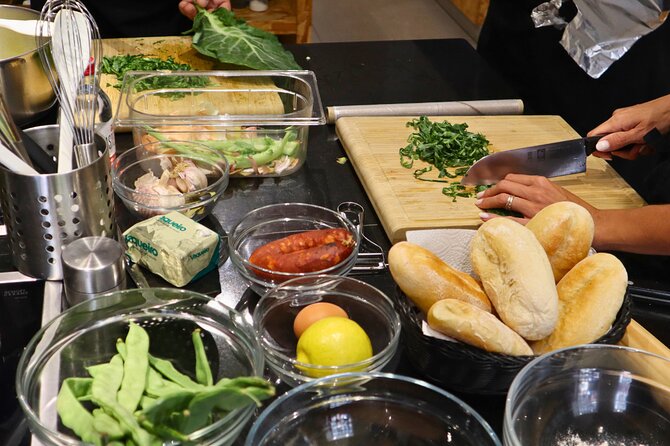
Portugal’s street food tells a bigger story than its small size suggests. In two hours at Compadre Cooking School, you prepare a pork bifana, caldo verde soup, and peixinhos da horta, the battered green beans linked to the origins of tempura. The class turns familiar Portuguese comfort food into a meal you can actually repeat at home.
I like the simple, useful recipes and the way the class explains where each dish fits into Portuguese daily life. I also like the shared table at the end, with wine and a taste of Ginja, which gives the lesson a friendly social finish. The one drawback is that some hands-on moments may feel a little closely managed, especially if you prefer to work entirely at your own pace.
Key points to know before booking
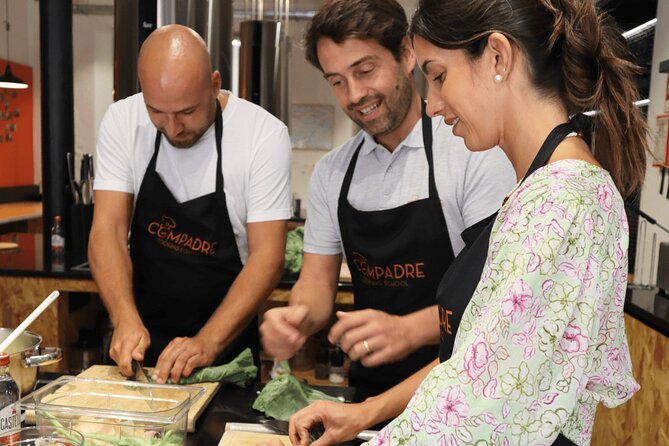
- Three classic dishes: Make bifana, caldo verde, and peixinhos da horta, rather than focusing only on the usual pastel de nata or cod recipes.
- A meal, not just a lesson: You eat the food you prepare, with a glass of red or white wine and Ginja cherry liqueur.
- Stories with the recipes: The chefs explain the origins and place of each dish in Portuguese food culture.
- Beginner-friendly cooking: No previous experience is needed, and the cooking stations are described as spacious and spotless.
- English instruction: The class is taught in English by the Compadre team, including instructors such as Marta, Anna, and Martha.
- Good value at $55: Ingredients, instruction, a shared meal, wine, and Ginja are included.
Why these three dishes make a better Lisbon food lesson
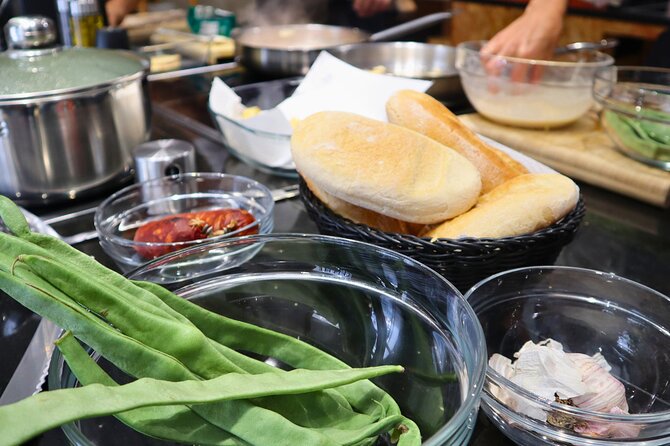
Many cooking classes in Portugal center on the country’s most famous exports. This one takes a different route. You work with dishes that ordinary people eat as snacks, quick lunches, or comfort food: a pork sandwich, a hearty soup, and battered vegetables.
That choice gives you a more grounded look at Portuguese cooking. The bifana is especially practical. Thin pork is cooked with seasoning and placed in bread, creating the kind of unfussy sandwich you might find at a local snack bar or festival. It is not a complicated restaurant plate. It is the sort of food that makes sense when you want something filling and fast.
Caldo verde brings a different texture and mood. The soup uses collard greens and is one of Portugal’s best-known traditional dishes. It is straightforward enough for a beginner, but the class uses it to show how a few basic ingredients can create a satisfying dish.
Then there are the peixinhos da horta. Despite the name, this dish is made with vegetables, not fish. The battered beans are associated with the cooking tradition that later inspired tempura. That connection gives the class its most interesting food-history detail, and it adds variety to the meal.
I like this mix because each recipe teaches a different technique. You work with soup, a sandwich filling, and a fried vegetable dish. You also leave with recipes that do not demand advanced equipment or years of kitchen practice.
More food tours with drinks in Lisbon:
- Lisbon Food Tour with Drinks and Food Included
★ 5.0 · 20 reviews - Rome: Trastevere Food tour with Free-Flowing Fine Wine
★ 5.0 · 2,853 reviews - Madrid: Tapas Food Tour with Drinks and Food
★ 4.9 · 651 reviews
Arriving at Compadre Cooking School
The meeting point is the Compadre Cooking School kitchen in the Lisbon District. You should arrive about five minutes early, enough time to settle in and get ready without rushing.
Wear comfortable clothing and shoes suitable for cooking. Comfortable shoes matter more than dressing up, since you will be standing and working around the kitchen. Smoking is not allowed, and alcohol or drugs are prohibited during the activity.
The cooking school has been described as modern, clean, and spacious. That matters here because a cramped kitchen can make a group lesson tiring. Clean work areas also help you focus on the food instead of worrying about where to place ingredients or equipment.
The class is taught in English. The instructors include members of the Compadre team such as Marta, Anna, and Martha, while Roy has also led a well-received session focused on Portuguese drinks. Instructor assignments may vary, so do not book expecting one particular person unless the operator confirms it.
This is not suitable for wheelchair users, an important point to check before reserving. Transportation is not included, so you are responsible for reaching the school and returning to your hotel afterward.
The opening: food stories before the cooking begins
The session starts with a short introduction to the dishes and their cultural setting. This is more useful than a long lecture because it gives you a reason to care about each recipe before you begin.
You learn how these foods fit into Portuguese daily life and why they appear at snack bars and festivals. The point is not to memorize dates or culinary terminology. It is to understand why a pork sandwich, a greens soup, and battered beans became part of the country’s everyday food culture.
I find this short background especially helpful for visitors who have eaten Portuguese food but have not yet learned how the dishes relate to one another. The stories make the cooking feel connected to local habits rather than like a collection of unrelated recipes.
The format also helps the class move at a good pace. With only two hours, the instructors need to explain enough to give context, then get everyone working. The available information suggests they keep that balance well.
Cooking the bifana, caldo verde, and peixinhos da horta
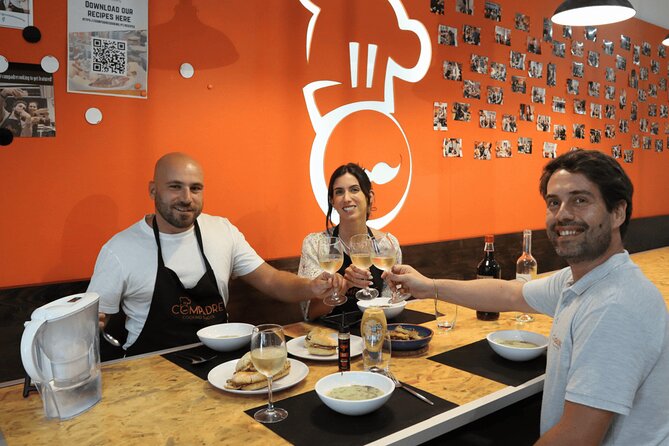
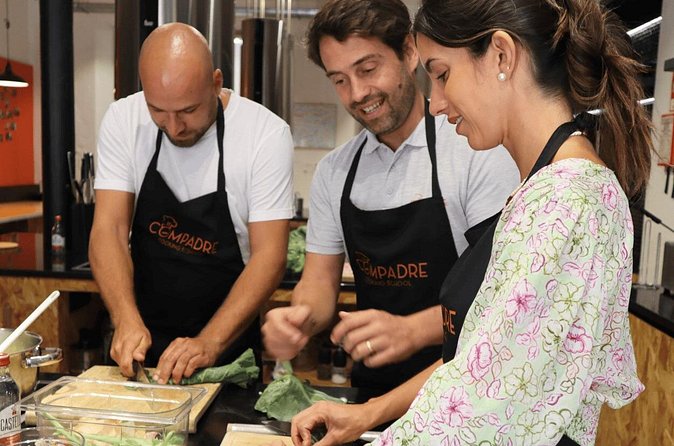
Once the introduction is over, you roll up your sleeves and work alongside the other participants. No prior cooking experience is needed. You do not need to arrive knowing knife skills, soup technique, or how to batter vegetables.
The bifana is likely to be the most familiar dish to many visitors because it is easy to understand at once: seasoned pork in bread. The value of making it in class is not complexity. It is learning the combination of preparation and seasoning that makes a simple sandwich taste distinctly Portuguese.
Caldo verde gives the session its comfort-food center. You help prepare the soup with collard greens, then see how the ingredients come together into a dish that is both humble and filling. One useful feature of this recipe is that it is easy to imagine making it again at home after your trip.
The peixinhos da horta adds the most playful element. The battered beans look like a snack, but their culinary connection to tempura gives the dish a wider story. It is also a good reminder that food traditions travel, change, and acquire new identities.
The class is designed so that everyone can take part throughout much of the process. That detail matters. Some cooking lessons leave one person chopping while everyone else watches. Here, the activities are arranged so participants can stay involved instead of standing behind the chef.
The balance is not perfect for every personality. One participant felt that Anna sometimes took over too much of the hands-on work rather than teaching through it. If you are an experienced home cook who wants total control of every step, you may find the guidance a little close. For a beginner, though, that supervision can make the process easier and less stressful.
A few more boozy trips around Lisbon worth a look
- Rome Cooking Class: Make Pasta and 3 Spritz Cocktails
★ 5.0 · 2,937 reviews - Pasta Cooking Class Near the Colosseum with 3 Spritz Cocktails
★ 5.0 · 1,686 reviews - Rome Tipsy Cooking Class: Make Pasta and Mix 3 Spritz Cocktails
★ 5.0 · 1,357 reviews - Paella Cooking Class in Madrid with Bottomless Wine Pairing
★ 5.0 · 985 reviews
Sitting down to eat what you made
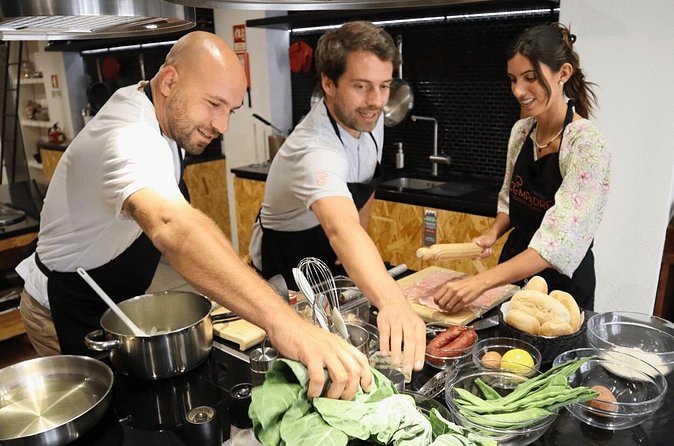
After the cooking, the group gathers around the table and eats the prepared food together. This is an important part of the experience, not a small sample at the end.
You get a shared meal of the dishes you have just made, along with a glass of red or white wine. A tasting of Ginja, Portugal’s traditional cherry liqueur, completes the food and drink portion.
The shared table changes the tone of the class. Instead of leaving as soon as the last pan is finished, you have time to compare the dishes, talk with the other participants, and enjoy the result at a relaxed pace. It also makes the class suitable for solo visitors who want a social activity without committing to a full evening tour.
The meal may be particularly satisfying after the practical work. You have seen the ingredients, helped prepare them, and can judge the final flavors with a better sense of how they came together. Several of the recipes are described as simple and delicious, which is exactly what you want from a short class.
The wine inclusion adds value, but remember that only one glass is included. Additional drinks cost extra and are not part of the stated package.
What the $55 price really includes
At $55 per person, this is not simply a two-hour demonstration. The price includes expert chef guidance, all cooking ingredients, the shared meal, one glass of wine, and a Ginja tasting.
That makes the cost reasonable for Lisbon, especially if you value an activity that combines food, instruction, and conversation. You are paying for more than a plate of food. You receive a practical introduction to three dishes, use of the kitchen and ingredients, a guided lesson, and a complete meal at the end.
The strongest value is for people who will use the recipes again. If you want a quick tasting with no participation, a market visit may suit you better. If you like learning by doing and plan to recreate the food at home, the class gives you more for your money.
It also saves you from booking a separate meal afterward. The prepared dishes are intended to function as the meal, not merely as small bites. Still, do not expect an all-day culinary program or a long series of courses. The activity lasts two hours and focuses tightly on three recipes.
Who will enjoy this class most
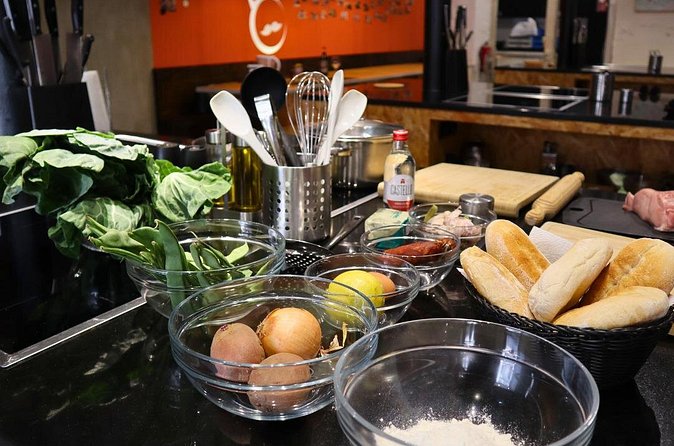
I would recommend it to first-time visitors who want a direct introduction to Portuguese food without spending an entire day in a kitchen. It also fits solo visitors, couples, and small groups who like meeting people around a shared table.
Beginners should feel comfortable booking. The class does not require previous cooking experience, and the instructors guide you through the steps. It is also a good choice for adventurous eaters who want something beyond the most common Portuguese dishes.
Families with children should check the age requirements before booking, since none are provided here. People with specific dietary needs should contact the school in advance. The recipes can be adapted, but you should not assume that every request can be handled on the spot.
This is less suitable for anyone who dislikes group cooking or wants a quiet, private lesson. You work alongside other participants, and the final meal is shared. It is also not suitable for wheelchair users.
Practical details that can shape your decision
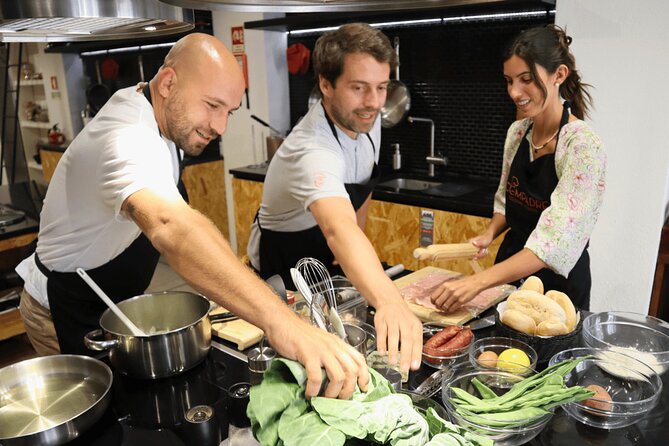
The class runs for two hours, with starting times based on availability. That makes it easy to fit around sightseeing, but you should leave enough time to reach the kitchen and arrive five minutes early.
The meeting point is the school itself, and no transportation is included. Check your route before the day of the class, especially if you are planning to come directly from another part of Lisbon.
Free cancellation is available up to 24 hours before the activity for a full refund. You can also reserve and pay later, which is useful if your schedule is still changing.
Bring comfortable shoes and wear clothes that allow you to cook without fuss. You do not need special equipment, ingredients, or experience. The school provides the cooking supplies and food.
Should you book the Compadre cooking class?
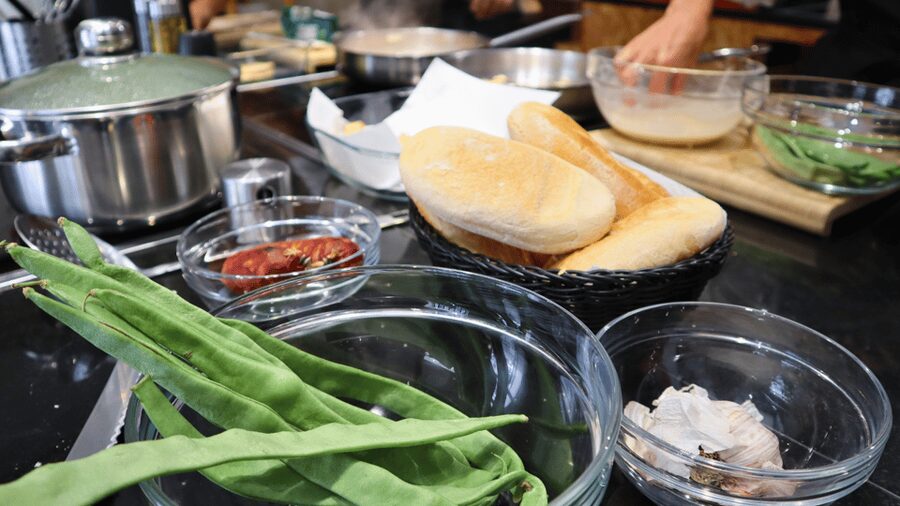
Book this class if you want to cook real Portuguese comfort food, eat a full shared meal, and leave with recipes that are realistic for a home kitchen. The bifana, caldo verde, and peixinhos da horta offer more local character than a lesson built only around famous tourist favorites.
I would be especially happy to recommend it to a first-time Lisbon visitor, a solo food lover, or anyone who wants a social evening with a clear activity at its center. The wine and Ginja add a pleasant finish, while the two-hour length keeps the commitment manageable.
Skip it if you want a private class, dislike group participation, or need wheelchair access. Also keep your expectations in check: this is a friendly, practical introduction, not advanced chef training. At $55, though, the combination of instruction, ingredients, meal, wine, and cherry liqueur makes it a strong pick for a hands-on taste of Portugal.
FAQ
How long does the Portuguese street food cooking class last?
The class lasts two hours.
Where does the cooking class meet?
The meeting point is the Compadre Cooking School kitchen in the Lisbon District.
What dishes will I prepare?
You will learn to prepare bifana, a Portuguese pork sandwich, caldo verde soup, and peixinhos da horta, battered vegetables linked to the origins of tempura.
Is previous cooking experience required?
No. The class is suitable for beginners and does not require prior cooking experience.
Are drinks included?
Yes. The price includes one glass of red or white wine and a tasting of Ginja, a traditional Portuguese cherry liqueur. Additional drinks are not included.
Can the recipes be adapted for dietary needs?
The recipes may be adapted for specific diets. Contact the cooking school in advance to discuss your requirements.
More Workshops in Lisbon
- Naples: Pizza-Making Workshop with Drink and Appetizer
★ 4.9 · 5,411 reviews - Istanbul:Original Turkish Mosaic Lamp Workshop w/ Snacks
★ 4.9 · 3,077 reviews - Mixology Class at Casa BACARDÍ in Puerto Rico
★ 5.0 · 1,469 reviews - Rome: Pizza & Tiramisu Class with Free Flowing Fine Wine
★ 5.0 · 973 reviews
Just added around Lisbon
- Lisbon Premium Pubcrawl: 1h Open Bar, Shots, VIP Club Entry★ 4.7 · 10 reviews
- Lisbon: Boat Tour 2:30H w/ Welcome Drink and Snacks★ 5.0 · 6 reviews
- Pub Crawl in Kazimierz (Jewish Quarter)★ 5.0 · 2 reviews
- New Year’s Eve Luxury Boat – DJ, Buffet & Open Bar★ 4.9 · 7 reviews
- Lisbon: Tipsy Tour Fun Bar Crawl with a Local Guide★ 4.9 · 116 reviews
- Lisbon: Sunset/Night Boat Party with Open Bar, Snacks & DJ★ 4.7 · 113 reviews
- Lisbon: Sailing Boat Tour with Drinks & Pastel de Nata★ 4.7 · 80 reviews
- Lisbon: Sunset Boat Party with 2 Drinks and Free Club Entry★ 3.9 · 93 reviews
Lisbon Boozy Tours, compared.

Sunset Boat Party Cruise with DJ and Open Bar
Read our review →
Daytime/Sunset/Night City Sailboat Tour with Drink
Read our review →

Tagus River Boat Tour with One Drink Included
Read our review →
Pub Crawl with Open Bar (Premium Upgrade Available)
Read our review →
Pub Crawl with Open Bar, Shots & VIP Club Entry
Read our review →
Lisbon Pub Crawl: Unlimited Drinks, Shots & V.I.P Club Entry
Read our review →
Sailboat Tour in Lisbon with drinks included | Morning and Sunset
Read our review →Browse the lists this tour appears in