
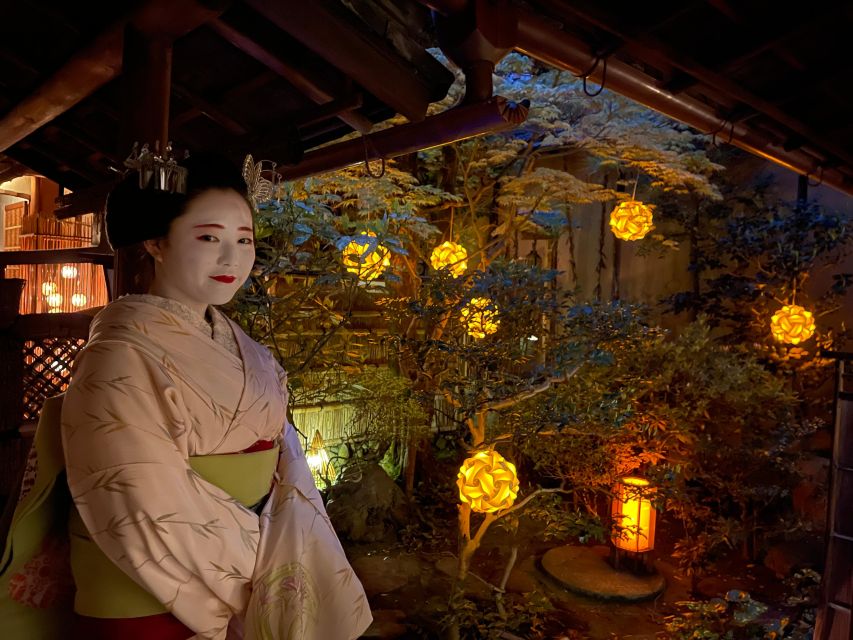
REVIEW · KYOTO
Kyoto: Maiko Happy Hour at a Historic Machiya
At Tondaya, you enter a 140-year-old machiya, not a modern theater dressed up for tourists. This nationally registered cultural landmark gives the evening its real sense of place, with wooden rooms, old objects, and the careful layout of a traditional Kyoto townhouse.
I like the chance to see a maiko perform close at hand, then ask questions during the party games. I also like the blend of arts: tea ceremony, Uji matcha, Japanese sweets, classical music, and buyō dance all fit naturally inside the old house.
The main caution is value. At $709 per person, this is an expensive two-hour experience, and language support may not always be smooth. One English-language booking was described as poorly translated, while another reported a shorter event with no tea or food, so it is wise to confirm the current format before paying.
Key points to know before booking
- A real Nishijin machiya: Tondaya is a 140-year-old wooden townhouse recognized as a culturally significant landmark by Kyoto City.
- Tea and dance in one small setting: The maiko serves Uji matcha and Japanese sweets before performing buyō, a refined traditional dance.
- Personal interaction is built in: You can join traditional party games, ask questions about maiko life, and take commemorative photos.
- The price demands careful thought: At $709 per person, you are paying for access, setting, and a rare meeting, not simply for a show.
- Bring socks, not stockings: Shoes come off inside, and socks are required.
- A geiko may appear instead: The performer depends on availability, and you cannot request one or the other.
Entering Tondaya, a 140-year-old Kyoto townhouse
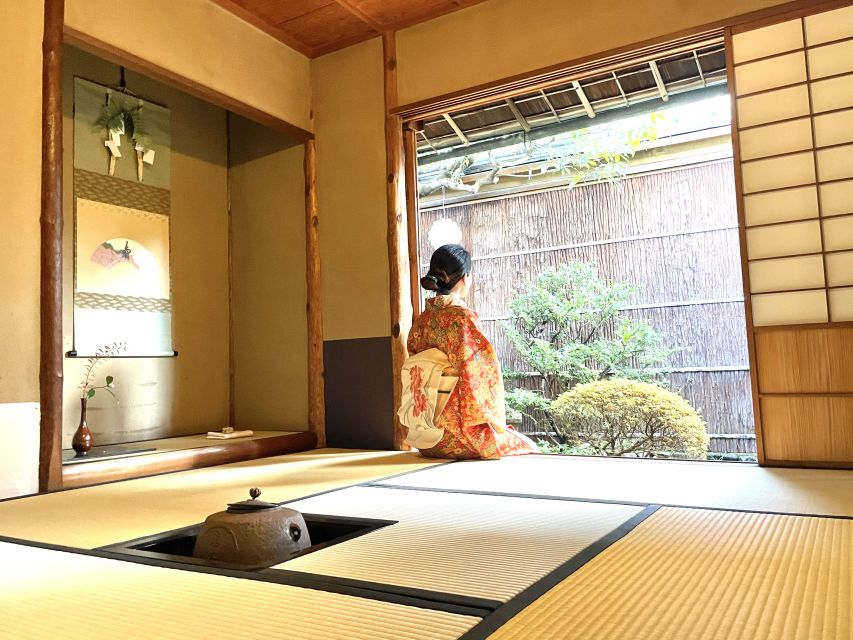
The experience begins at Tondaya-Nishijin Japanese Cultural Experience Museum. Tondaya is in Kyoto’s Nishijin area, known for traditional textile work and old townhouses. The activity does not simply place a maiko in a hotel room or restaurant. It uses the house itself as part of the program.
You first receive a guided look at the machiya. Expect wooden interiors, traditional rooms, old household objects, and stories tied to the building. The available description does not promise a full museum tour or a set list of rooms, so think of this portion as an introduction to the house rather than a large-scale exhibition.
That distinction matters. A machiya is designed around narrow proportions, wooden structure, internal spaces, and a close connection between practical family life and formal hospitality. Even without a long lecture, the building helps you understand the setting in which geisha arts developed.
You will remove your shoes, so wear clean socks. The instructions specifically ask for socks and say not to wear stockings. This is a small point, but arriving unprepared can make the first few minutes awkward in a formal Japanese home.
The staff work across several traditional arts, including kimono, tea ceremony, calligraphy, and ikebana. English, Chinese, and Japanese support is offered, but not every staff member speaks English. An interpreter or translation device may be used when needed.
More history tours with a drink in Japan:
- Prague Historic Pub Tour with Drinks Included
★ 5.0 · 2,084 reviews - Southern Flavors Food, Pub Crawl, and History Walking Tour
★ 4.5 · 1,623 reviews - Boston Freedom Trail History Pub Crawl Small-Group Tour
★ 5.0 · 996 reviews
Tea with Uji matcha before the performance
The maiko hosts a tea ceremony and serves Uji matcha with Japanese sweets. This is not presented as a full tea-school lesson with every technical movement explained in detail. Instead, it gives you a short, direct look at the manners and calm rhythm of Japanese tea service.
The matcha is important because Uji, near Kyoto, is one of Japan’s best-known tea-producing areas. The combination of tea, sweets, and a maiko in a traditional home creates a more personal setting than a quick cup served at a sightseeing stop.
I would pay attention to the small actions here: how the bowl is handled, how the sweet is positioned, and how guests are expected to receive the tea. If the translation is clear, ask about the meaning of the gestures rather than treating the ceremony as a photo break.
There is one important point of uncertainty. The stated program includes tea and sweets, but a past booking account said there was no tea or food and that the event lasted barely an hour. That may reflect a changed format, a communication problem, or a different version of the activity. Since the current advertised program does include Uji matcha and sweets, ask for confirmation if those details are essential to your decision.
Alcoholic drinks are not included, despite the happy hour name. The phrase refers to a relaxed social gathering, not a package of beer, wine, or cocktails.
Buyō dance in an intimate wooden room
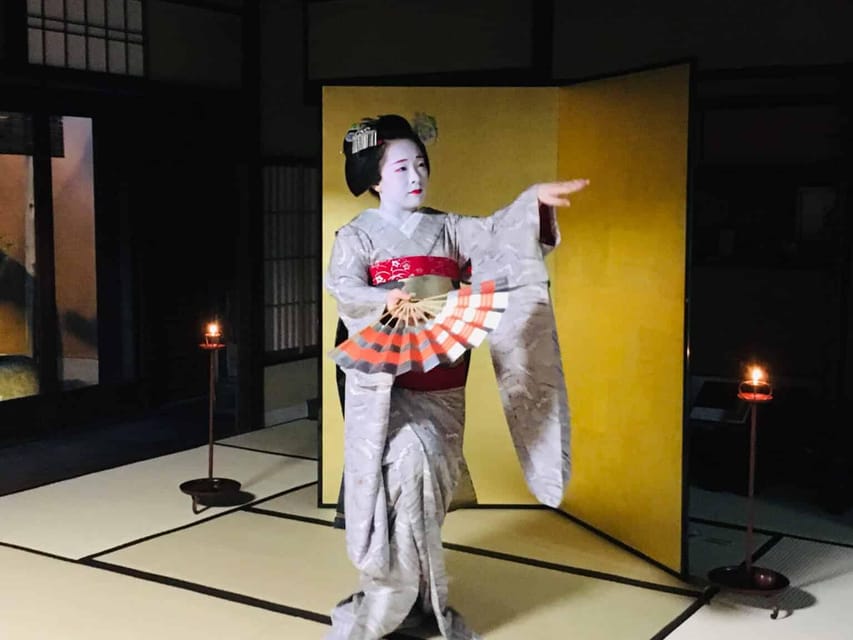
After the tea service, the maiko performs buyō, a polished form of traditional Japanese dance accompanied by classical music. The performance is meant to suggest the atmosphere of an elegant late Edo period gathering in a machiya.
You should expect restraint rather than spectacle. Buyō often depends on controlled movement, posture, fans, costumes, music, and tiny changes in expression. In a smaller room, you can notice details that disappear in a large stage show.
The program does not state the exact number or length of dances. It also does not name the performer in advance. Depending on availability, a geiko may appear instead of a maiko, and preferences cannot be accepted.
That difference is worth understanding. A maiko is an apprentice in Kyoto’s geisha tradition, while a geiko is a fully trained performer. Both represent serious traditional arts, but if meeting a maiko specifically is your main reason for booking, you must accept the possibility of a geiko replacement.
The music and dance are likely to be the most formal part of the two hours. The later games and photographs create a more relaxed mood, but the dance gives the program its artistic center.
Traditional party games and time for questions
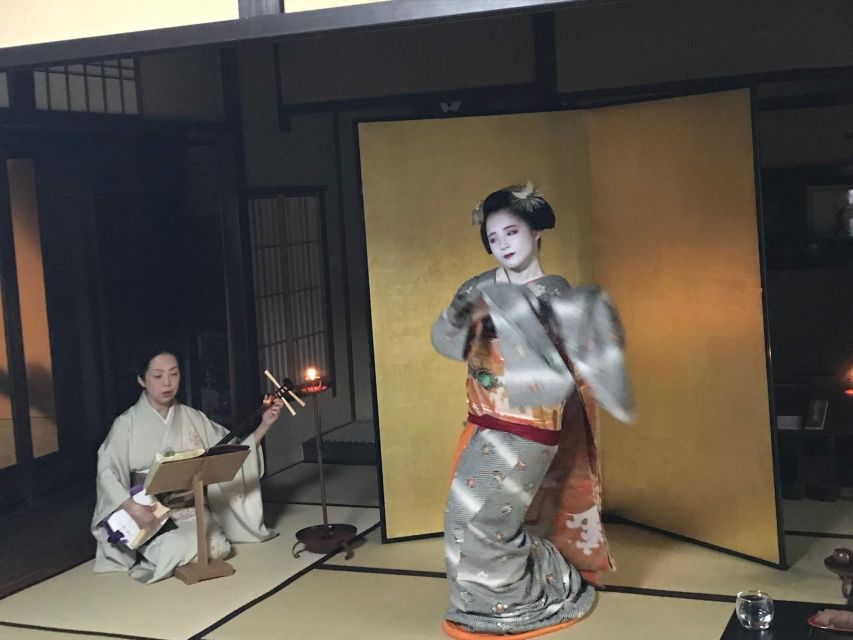
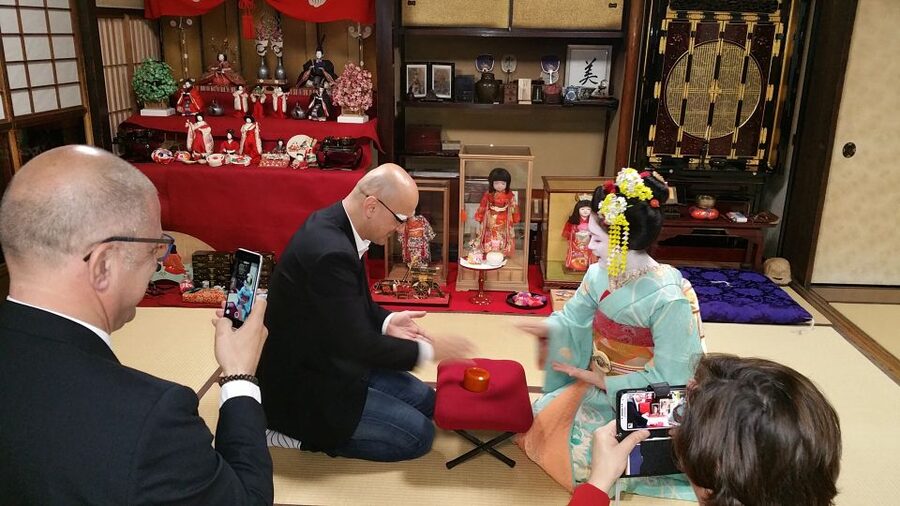
After the dance, you can try traditional maiko party games. The maiko explains the rules and plays with you. These games are meant to be social and light, so you do not need previous knowledge of Japanese customs.
This part may be the best fit for you if you want contact rather than a performance viewed from a distance. You can ask about maiko culture, training, clothing, dance, or the customs of a traditional gathering. The supplied information does not list the exact games, so do not arrive expecting a particular title or format.
Language affects this portion more than any other. If the interpreter is effective, the games can make the meeting feel warm and personal. If translation is weak, the humor and rules may be harder to follow.
English support is available, but it is not guaranteed that one fluent English-speaking staff member will lead the full event. A translation device might be used. One report praised the maiko and English translator, while another described the translation as so weak that the program felt disorganized. I would keep expectations measured and ask how interpretation will be handled for your date.
A few more boozy trips around Japan worth a look
- Tokyo Bar Hopping Tour in Shinjuku (All-You-Can-Drink + Dinner)
★ 5.0 · 3,587 reviews - Shibuya Meltdown Nightlife Tour: All-You-Can-Drink Bar Hopping
★ 5.0 · 1,058 reviews - Osaka: Dotonbori District River Cruise with Drink Discount
★ 4.2 · 876 reviews - Tokyo: Shinjuku Bar Hopping with All-You-Can-Drink & Dinner
★ 4.9 · 440 reviews
Photos with a maiko
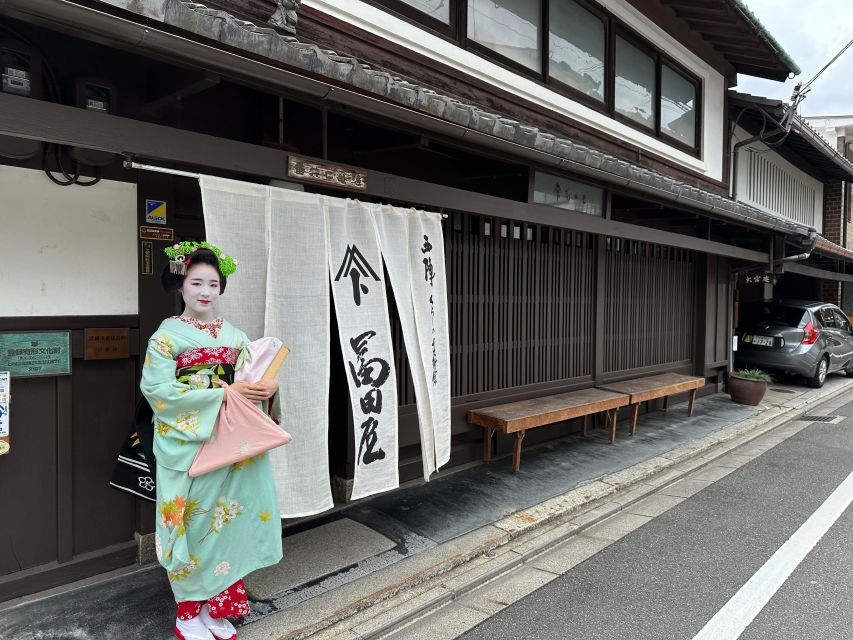
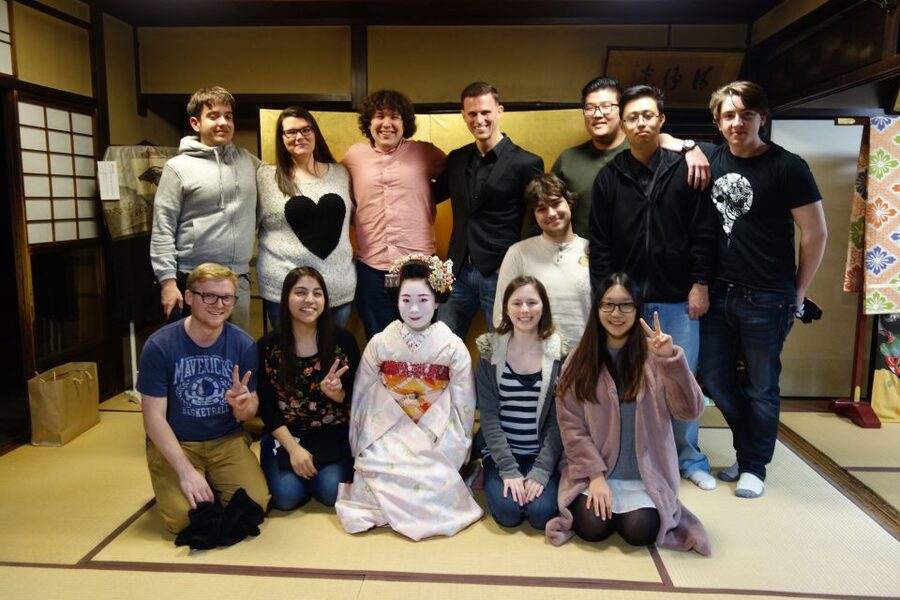
The experience ends with time for commemorative photographs. The description presents this as a rare opportunity because maiko generally do not take photos with members of the public in ordinary circumstances.
You can take as many photos as you like during the allotted photo time, according to the supplied details. Still, normal courtesy matters. Follow the staff’s directions, avoid touching the costume or hair, and let the staff arrange the setting.
The photos are not a minor extra here. For many people, the chance to meet a maiko at close range is the main reason to consider the price. If you are choosing between a standard dance performance and this activity, the personal photo opportunity is one of the clearest differences.
At the same time, the photo session does not by itself justify a very high price for everyone. If you mainly want a professional portrait, you might prefer a dedicated studio experience. If you value the full setting, the tea, the games, and the cultural explanation, the photographs become a final part of a larger visit.
What $709 per person really buys
The listed price is $709 per person. That puts this experience in the luxury category, especially for a program advertised at two hours. You are not paying only for admission to a dance. You are paying for a private or specially arranged encounter, access to a historic property, a tea service, a cultural explanation, traditional games, and photography.
That can be worthwhile for a visitor who has already seen Kyoto’s temples and wants a personal introduction to an art form that is normally difficult to access. It may also suit a special occasion, particularly if the group values the historic house and the chance to meet the performer.
The value is harder to defend if you are comparing this with an ordinary cultural show. A past booking listed a much lower converted cost for two people, and another price report described a charge of more than $200 per person for a shorter event. Prices can change by date, currency, and booking channel, so check the final total carefully.
I would ask three questions before committing:
- Is the current program definitely two hours?
- Will tea and Japanese sweets be served on your date?
- Will a live English interpreter attend, or will staff use a translation device?
The answers will help you decide if the price matches what you want. The no-refund policy makes this check especially important.
Timing, dates, and the strict cancellation rule
The activity lasts two hours, but starting times depend on availability. Arrive on time at Tondaya-Nishijin Japanese Cultural Experience Museum. This is a reserved cultural appointment, not a drop-in show, and the maiko must be arranged in advance.
Reservations require at least two participants. A solo booking is not available under the stated conditions.
The no-refund rule is strict because the maiko must be reserved at least ten days ahead. Cancellation is allowed only when made ten days before the scheduled appointment, according to the supplied conditions. After that point, the cost of the arrangement must be paid by Tondaya.
The venue closes from December 31 through January 1. You cannot reserve a maiko appointment from December 29 through January 10. If your Kyoto visit falls around New Year, check the date before building this into your schedule.
Who will get the most from this experience
I would recommend this to someone who wants more than a quick costume photo or a large stage show. You should enjoy traditional music, careful movement, Japanese etiquette, and the quiet character of an old house.
It also suits visitors who are comfortable paying for rarity. The meeting is special because maiko are not normally available for close public interaction. That limited access is part of the price.
Families and mixed-age groups may enjoy the party games, but the event is not described as a children’s program. Guests who need wheelchair access should choose another activity because Tondaya is not suitable for wheelchair users.
You should be open to either a maiko or a geiko. If the performer’s exact status matters more than the house, tea, and dance, this booking carries too much uncertainty.
Practical tips for a smoother visit
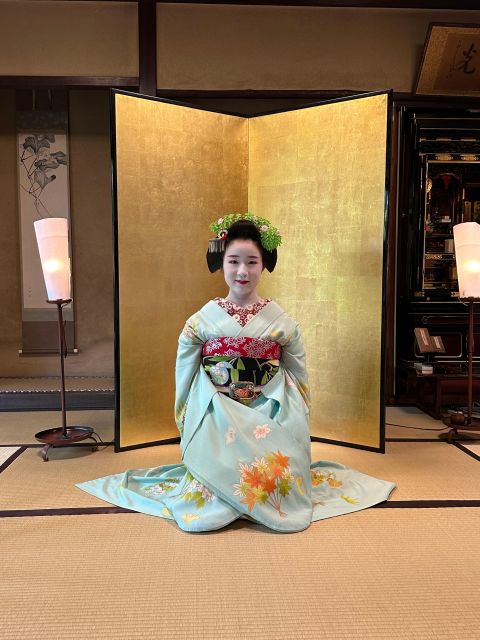
Wear socks that you would be comfortable wearing inside a historic home. Do not wear stockings, as the instructions specifically exclude them.
Read the language notes closely. Japanese, English, and Chinese are supported, but the level of live interpretation can vary. A translation device may be part of the solution.
Do not assume happy hour includes alcohol. Alcoholic drinks are not included.
Keep your schedule flexible enough to arrive early. The exact meeting time depends on availability, and late arrival could cut into a short program.
Check the final price in your own currency. The listed amount is $709 per person, while older booking amounts have appeared differently after currency conversion. The current checkout total is the figure that matters.
Most important, make sure every member of your party understands the cancellation terms. This is not a good activity to reserve casually and reconsider later.
FAQ
Where does the Maiko Happy Hour take place?
It takes place at Tondaya-Nishijin Japanese Cultural Experience Museum in Kyoto.
How long is the experience?
The advertised duration is two hours. Starting times depend on availability.
What is included?
The program includes a guided tour of the machiya, a maiko dance performance, traditional party games, a tea ceremony, photography opportunities, and a lesson about Kyoto and maiko culture.
Is tea included?
The stated program includes a tea ceremony with Uji matcha and Japanese sweets. Alcoholic drinks are not included.
Do I need to bring anything?
You need to bring socks. Stockings should not be worn because you will enter a traditional indoor setting without shoes.
Can I choose a maiko instead of a geiko?
No. Depending on availability, a geiko may be arranged instead of a maiko, and preferences cannot be accepted.
What languages are available?
The listed languages are Japanese, English, and Chinese. Some staff may not speak English, and an interpreter or translation device may be used.
Can I take photos with the performer?
Yes. The program includes time for commemorative photographs with the maiko or geiko.
Can wheelchair users join?
No. The experience is not suitable for wheelchair users.
What is the cancellation policy?
The activity is non-refundable unless cancellation is made at least ten days before the scheduled appointment. The venue is closed from December 31 to January 1, and maiko appointments cannot be reserved from December 29 to January 10.
Should you book Tondaya’s Maiko Happy Hour?
Book it if you place a high value on access, atmosphere, and personal contact. The combination of a 140-year-old machiya, tea ceremony, buyō dance, party games, and photographs offers a rare look at Kyoto’s traditional arts in a real historic setting.
Skip it if $709 per person feels hard to justify, if you need guaranteed English interpretation, or if you want a longer performance with a fixed menu and performer. Before booking, confirm the two-hour schedule, tea service, interpreter arrangements, and whether a maiko or geiko is expected.
For the right visitor, this is an intimate cultural appointment rather than a standard sightseeing stop. Just pay for it with clear expectations, clean socks, and a careful look at the cancellation terms.
Just added around Japan
- Izakaya & Bar Hopping Tour Around Aomori Station★ 5.0 · 3 reviews
- Tokyo: Shinjuku Golden Gai Bar Hopping Night Tour★ 4.4 · 8 reviews
- Tokyo:Shinjuku Ni-chome LGBTQ+ Bar Hopping Tour with Guide★ 5.0 · 2 reviews
- Tokyo: Shinjuku Nightlife Tour with Karaoke and Bar Hopping★ 4.1 · 4 reviews
- Tokyo: Shinjuku Izakaya and Golden Gai Bar Hopping Tour (2h)★ 4.9 · 67 reviews
- Tokyo: Shinjuku Bar Hopping & Karaoke Night Tour★ 4.9 · 19 reviews
- Tokyo: Shinjuku Golden Gai Bar Hopping that only locals know★ 5.0 · 5 reviews
- Tokyo Pub Crawl: Unique Japanese Drinks in Shimokitazawa★ 5.0 · 7 reviews
Kyoto Boozy Tours, compared.
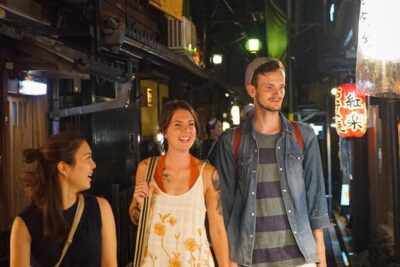
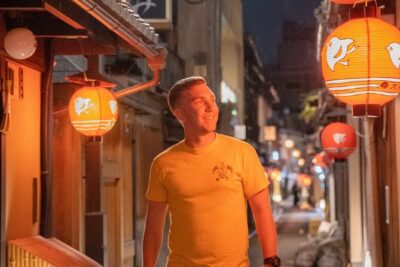
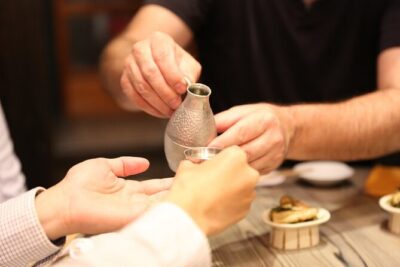
Private Food & Sake Tour in Central Kyoto with Sake Sommelier
Read our review →

Browse the lists this tour appears in