
REVIEW · LONDON
Booze, Brothels & the Bard: London’s Bawdy Borough
Southwark’s past is not polite, and that is exactly what makes this walking tour so much fun. For centuries, the area outside the City of London’s control became a home for brothels, prisons, theatres, and taverns, giving it the nickname London’s Bawdy Borough.
I like the way this tour connects famous names with easy-to-miss places. You see the remains of Winchester Palace, walk past the site of Marshalsea Prison, and follow Shakespeare’s Southwark while also hearing about Charles Dickens and a nineteenth-century pub landlady’s ghost. I also like the small group limit of 15 people, which gives Tom Currie, the named guide praised in several bookings, room to answer questions.
The main drawback is pace. Two hours and roughly two miles gives you a strong introduction, but most stops receive only a few minutes. You will see the outside of the Globe Theatre rather than automatically entering it, and Borough Market can be very crowded, especially on a Sunday.
Key points about London’s Bawdy Borough
- A two-mile history walk: The route takes about two hours from Borough Station to Shakespeare’s Globe.
- Southwark’s less-polished past: Learn how prostitution, drinking, crime, and theatre shaped the district.
- Thirteen major stops: The walk includes Marshalsea Prison, Crossbones Garden, Borough Market, Winchester Palace, the Clink, and both Globe sites.
- A guide-led experience: Tom Currie leads in English, with a friendly, witty approach and time for questions.
- A small-group setting: Attendance is limited to 15 people, making it easier to hear and interact.
- Good value at $26: You get a focused local history tour, though museum and theatre entry fees are not part of the experience.
Why Southwark makes such a good history walk
Start outside Borough Station on Borough High Street, where the guide waits with a Historic London Tours sign. This is a handy meeting point because the walk begins right in the district it sets out to explain.
Southwark developed differently from the City of London. For centuries, it sat beyond the City’s legal reach, across the Thames and near the main road south. That separation helped create space for activities that respectable civic authorities preferred to keep at arm’s length.
You will hear how prostitution existed here from Roman times, then follow the area through the medieval period, the age of Shakespeare, and the London remembered by Charles Dickens. The title may promise booze and brothels, but the tour is really about how law, money, transport, entertainment, and social class shaped one London neighbourhood.
The tone is lively rather than solemn. Tom Currie has been praised for explaining complicated stories clearly, keeping the group moving, and welcoming questions. One useful touch is a link supplied after the walk so you can revisit the information later, an advantage when several centuries of names and events arrive in quick succession.
A few more boozy trips around London worth a look
- London : Central London Bar Crawl with discounts on drinks
★ 4.4 · 81 reviews - London: Paint and Sip in the Dark with Bottomless Drinks
★ 4.9 · 56 reviews - London: River Thames Sunset Speedboat Experience with Drink
★ 4.9 · 25 reviews
Marshalsea Prison and the human cost of debt
The first substantial stop is the former Marshalsea Prison. Only part of the old prison survives, but even a small remnant can make the subject feel real.
Marshalsea was notorious for imprisoning people who could not pay their debts. That detail matters because it reveals a London where financial trouble could become a legal disaster. The prison is also tied to Charles Dickens, whose family experience of debt and imprisonment helped shape his view of poverty and punishment.
This is one of the tour’s strongest moments for Dickens fans, but you do not need to know his books in advance. The guide uses the place to explain the social world behind the stories, rather than treating Dickens as a detached literary figure.
The stop lasts only around five minutes, so you should expect a sharp explanation, not a long visit inside a preserved prison. The value comes from the guide’s context and from seeing what remains in its actual Southwark setting.
Crossbones Garden and the Winchester Geese
From Marshalsea, the route continues to Crossbones Garden, a memorial site connected with people buried outside the established church system. The place is especially associated with the Winchester Geese, the medieval prostitutes licensed by the Bishop of Winchester.
This is where the title’s brothel history becomes more specific. The Winchester Geese were not simply unofficial street workers. Their trade operated within a system shaped by local power, church authority, and profit. Southwark’s sexual economy was part of the district’s structure, not an isolated side story.
Crossbones Garden also brings a quieter mood to the walk. After the jokes and colourful names, you are reminded that the people caught in this history were often poor, marginalised, or denied a proper place in society.
Again, the guided explanation is brief. If you want time to reflect or study the memorial in detail, you may need to return independently.
The Hop Exchange, the George Inn, and Borough Market
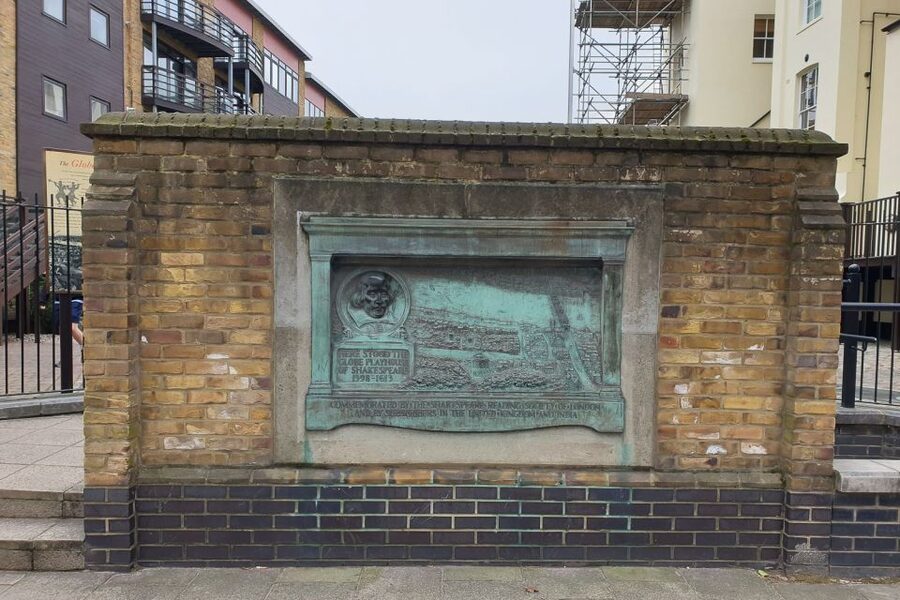
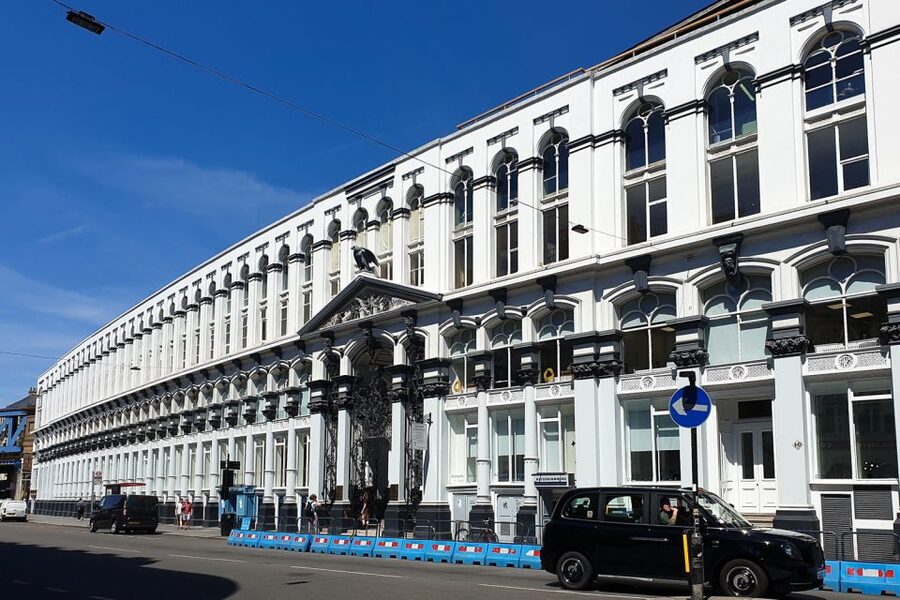
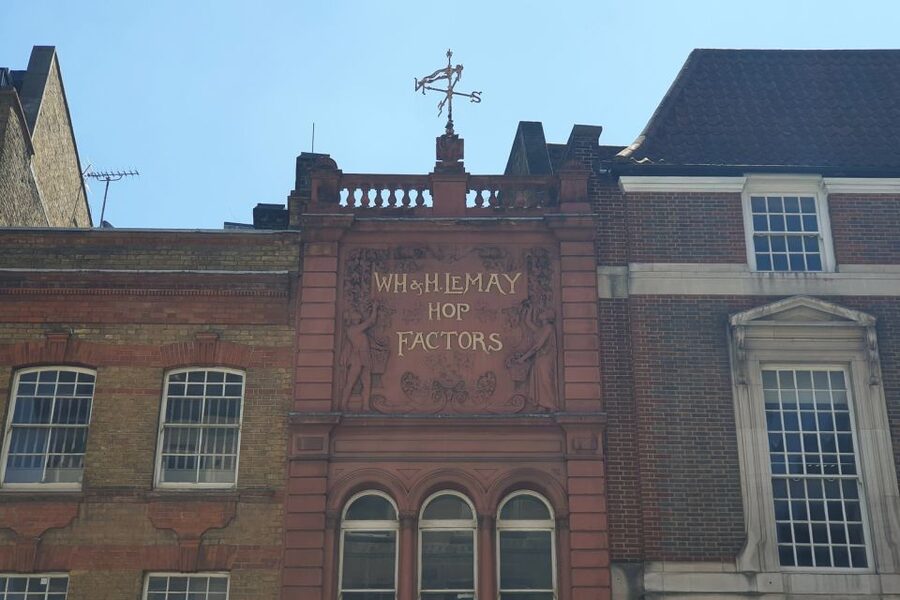
The Hop Exchange introduces Southwark’s commercial past. Its name points to the trade in hops, an essential ingredient in brewing. This is a neat link between the area’s business life and the tour’s focus on booze.
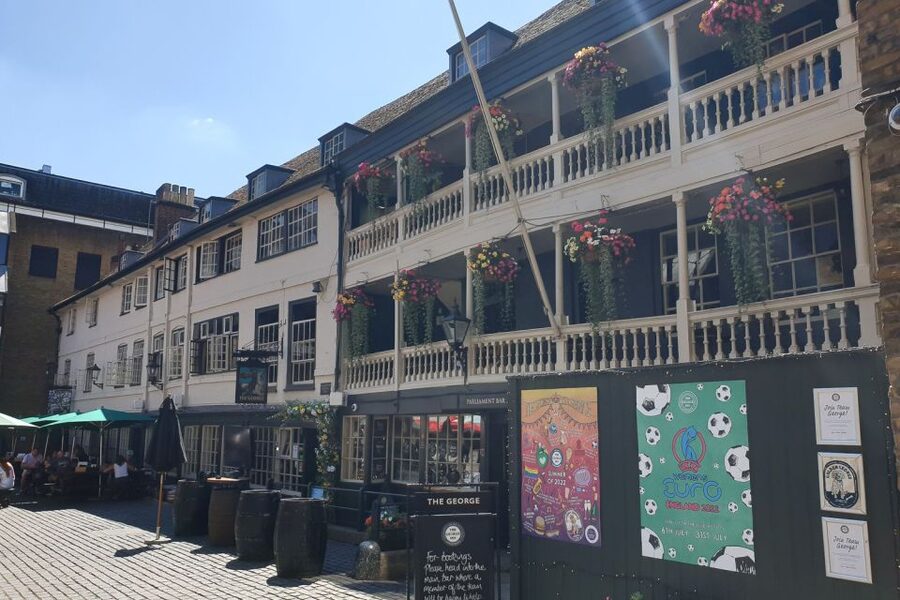
The George Inn shifts the story toward travel and tavern culture. It is one of London’s historic coaching inns, and its surviving structure gives you a sense of the sort of place where people ate, drank, lodged, and exchanged news before modern hotels and transport.
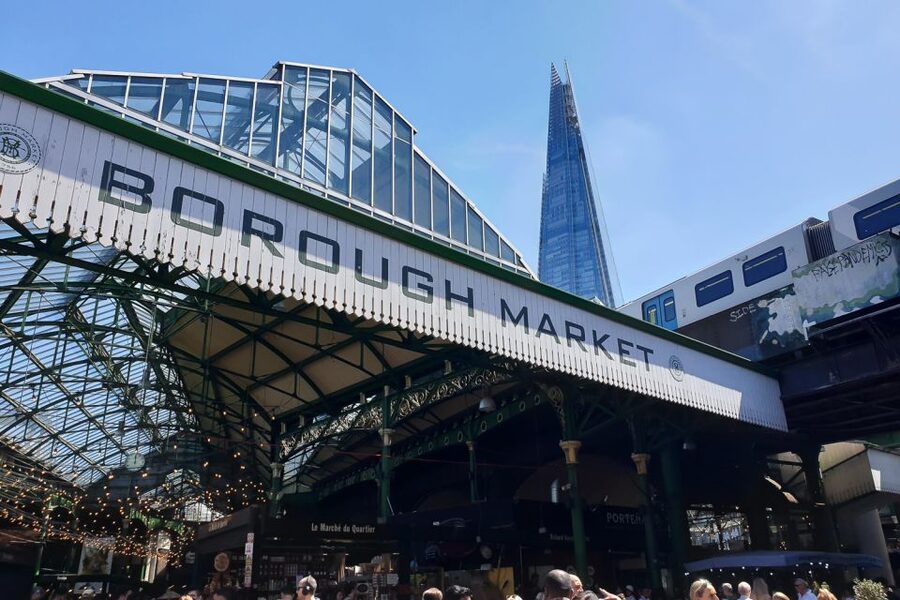
Then comes Borough Market, one of London’s largest and oldest markets. You will not get a market tour or a dedicated tasting session, so do not book this walk expecting food samples. Instead, the market helps show how Southwark has long served people on the move.
The market can be very crowded. A Sunday booking may mean weaving through dense foot traffic, and staying close to the guide matters. That said, the noise and movement fit the subject. Southwark has never been a quiet museum piece.
If you have time, Borough Market is a good place to revisit after the walk. The tour gives you a historical frame, then you can return for food at your own pace.
Same city, a completely different kind of round:
- Pub Crawl of Central London
★ 5.0 · 1,022 reviews - Alcotraz Prison Cocktail Experience in London
★ 5.0 · 834 reviews - Bombay Sapphire Gin Distillery Tour and Cocktail
★ 4.5 · 725 reviews - Immersive Magic Experience with Craft Cocktails in London
★ 5.0 · 594 reviews
The Old Operating Theatre and Southwark Cathedral
The Old Operating Theatre Museum and Herb Garret adds medical history to the route. This stop broadens the story beyond sex, crime, and theatre, showing another side of old London life.
The museum is housed in a historic setting and is connected with earlier medical practice. The tour only allows a short guided stop, so you should not expect entry or a full museum visit as part of the $26 ticket. If medical history interests you, treat this as a reason to come back separately.
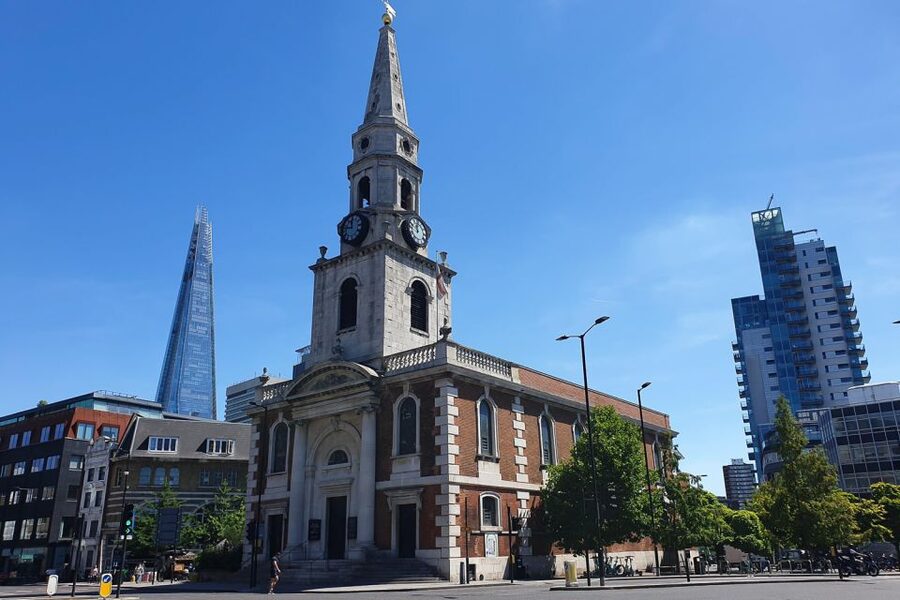
Southwark Cathedral provides another change of tone. Its long religious history contrasts with the nearby prisons, inns, theatres, and brothels. The cathedral helps explain how different forms of authority existed side by side in the same small area.
One person on the walk later returned to see the cathedral interior after hearing about its age and importance. That is a useful way to use this tour: let the guide point out the places worth a longer visit, then build your own follow-up list.
London Bridge and the route through time
London Bridge is more than a crossing point here. It helps explain why Southwark developed as a busy gateway between the City and the roads leading south.
The bridge connected commerce, travel, entertainment, and law. People crossed it for work, trade, pilgrimage, and pleasure, carrying money and news into the district. That traffic helped support markets, taverns, inns, and theatres.
The walk does not treat each stop as a separate fact. Instead, the guide links them. A prison connects to Dickens, the market connects to trade, the bridge connects to movement, and the theatre connects to Southwark’s freedom from City restrictions.
That connected storytelling is important. Without it, a list of old buildings can feel random. With it, the neighbourhood begins to make sense.
Winchester Palace and the Clink
The remains of Winchester Palace are among the route’s most striking historical fragments. This was once the London residence of the Bishop of Winchester, whose religious authority was tied to the licensing of the Winchester Geese.
The surviving ruins are not a complete palace, so set your expectations accordingly. You will see what remains and hear how the site fits into Southwark’s political and social story. The contrast is memorable: a powerful bishop’s residence stood close to the businesses and entertainments that gave the district its disreputable name.
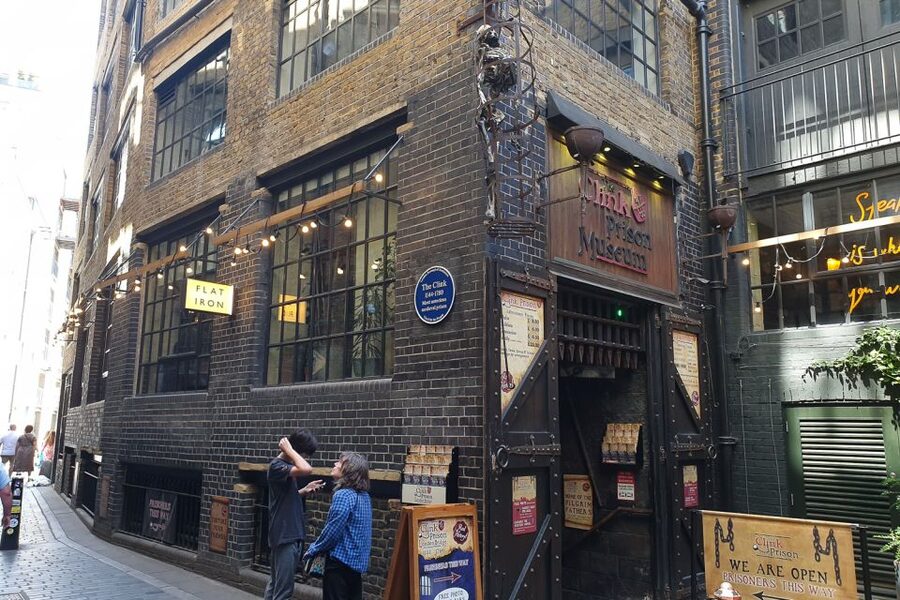
Next comes the Clink, one of Southwark’s most famous prisons. Parts of the area can still be seen, while the Clink Prison Museum operates as a separate attraction. The walking tour gives you the setting and background, but museum entry is not included.
The Clink name has become part of everyday English, which makes this a satisfying stop even if you do not visit the museum. If you want displays and a longer look at prison history, allow extra time and budget for a separate ticket.
Shakespeare’s original Globe site and the modern theatre
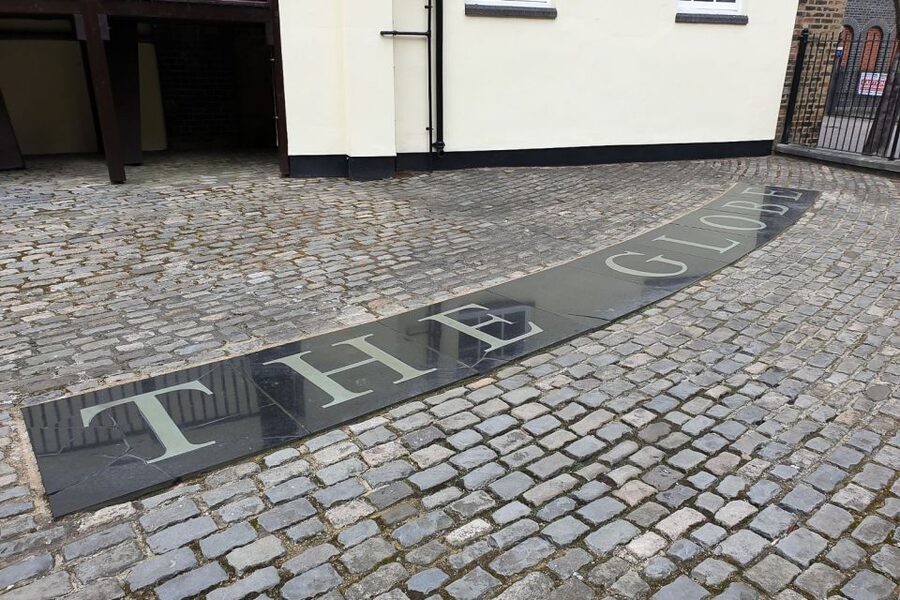
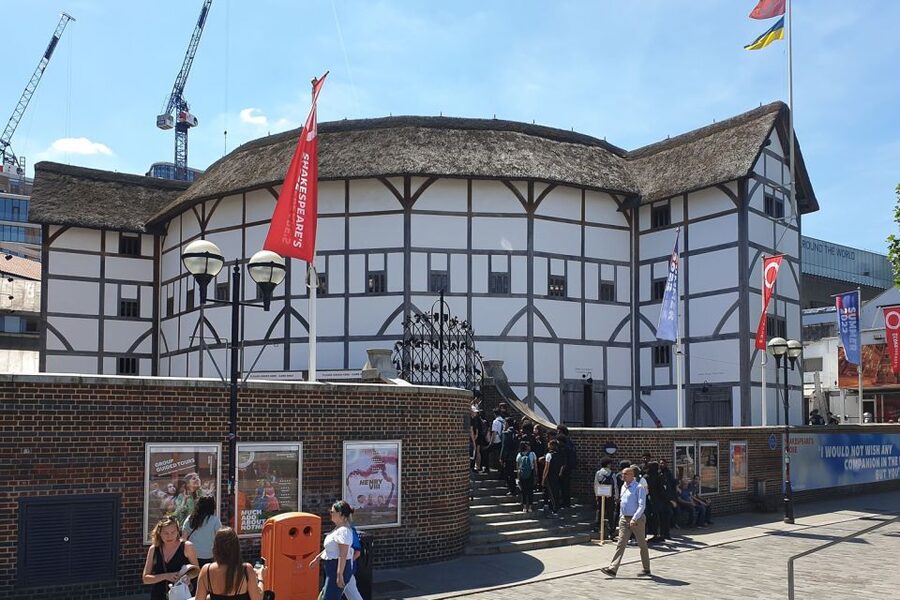
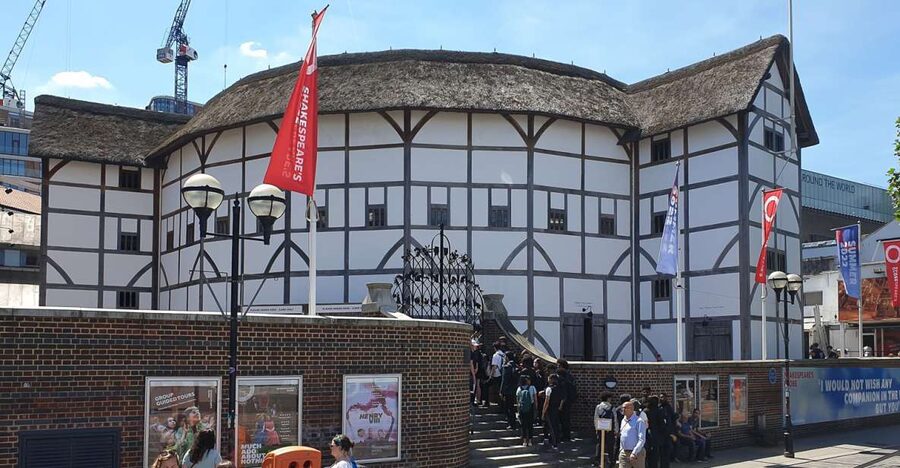
The final section follows Shakespeare. You visit the original site of the Globe Theatre, then finish near Shakespeare’s Globe, the modern reconstruction on the riverside.
This is a particularly good part of the walk because it shows how theatre depended on Southwark’s location. The area offered access to large crowds and sat outside the City’s direct control. Shakespeare’s audiences could cross the river for drama, comedy, and spectacle in a district already associated with taverns and less formal entertainment.
The modern Globe is the natural end point, but the walking tour does not include a full theatre visit. You may see the building and hear its connection to the original site, then decide if you want a separate ticket for a guided tour or performance.
Plan your time carefully if the Globe is your main interest. Two hours gives you a useful introduction, while a dedicated theatre visit allows a closer look. One person specifically wished for more time at the Globe before realising that entry required a separate ticket.
Finishing near London Bridge Station makes it easy to continue your day, return to Borough Market, visit Southwark Cathedral, or explore the riverside.
What the $26 price really gets you
At $26 per person, this is a good-value introduction to Southwark if you want stories rather than admission-based sightseeing. You pay for a live English-speaking guide, a planned route, local context, and access to a set of places that are easy to pass without noticing.
The price does not cover entry to the Old Operating Theatre Museum, the Clink Prison Museum, or Shakespeare’s Globe. That is not unusual for a walking tour, but you should add those costs only if you want more time inside the sites.
The small group limit improves the value. With no more than 15 people, you have a better chance of hearing the guide on busy streets and asking questions at each stop. Tom Currie has been especially praised for being friendly, clear, and willing to follow up when a question needs more research.
I would book this early in a London visit if Southwark is new to you. The walk gives you a useful map of the district, then you can decide which places deserve a second visit.
Practical details before you book
The walk lasts about two hours and covers roughly two miles, or 3.2 kilometres. You should be comfortable walking on city streets and standing at outdoor stops.
Meet just outside Borough Station on Borough High Street. Look for the Historic London Tours sign. The walk ends near Shakespeare’s Globe, close to London Bridge Station.
The tour is conducted in English and is not suitable for children under 13. Its subject matter includes prostitution, imprisonment, poverty, and other adult themes, so the age limit makes sense.
You can cancel up to 24 hours before the start for a full refund, and the reserve-now, pay-later option gives you some flexibility. Check the available start times when booking, since the exact schedule is not fixed in the tour details.
Wear comfortable shoes and keep the group in sight around Borough Market. Crowds can slow the route, especially on Sundays.
Who should book this Southwark walk?
I would recommend it to first-time London visitors who want more than the usual royal palaces and major museums. It is also a good fit for returning visitors who have crossed London Bridge many times without understanding the streets on the south bank.
History fans will appreciate the links between medieval church power, Victorian poverty, prison life, markets, and Shakespearean theatre. Dickens readers and theatre fans get extra value from the literary connections.
The tour suits adults and families with older teenagers, but younger children may find the subject matter unsuitable. It also works well for anyone who likes a guide with humour and a clear story rather than a long lecture.
You may want a different experience if you prefer extended time inside museums, dislike walking in busy areas, or want a dedicated Globe Theatre visit. This is a broad introduction, not a deep examination of any single site.
Should you book Booze, Brothels & the Bard?
Book it if you want to understand why Southwark became London’s Bawdy Borough and you enjoy history with a slightly wicked edge. The best parts are the connections: the Winchester Geese beside Winchester Palace, Dickens beside Marshalsea Prison, and Shakespeare beside the old theatre district.
At $26, the tour offers solid value, especially with a small group and an engaged guide such as Tom Currie. Just remember that most stops are brief and indoor admissions are separate.
I would choose this walk early in a London stay, then return to the Globe, cathedral, Borough Market, or one of the museums that catches your interest. That combination gives you both the quick street-level story and the slower visit that each place deserves.
FAQ
How long is the Booze, Brothels & the Bard tour?
The walking tour takes around two hours.
How far does the tour travel?
The total walking distance is about two miles, or 3.2 kilometres.
Where does the tour begin?
It begins just outside Borough Station on Borough High Street. The guide will be holding a Historic London Tours sign.
Where does the tour finish?
The walk finishes near Shakespeare’s Globe Theatre, close to London Bridge Station.
Is entry to Shakespeare’s Globe included?
No. The tour visits the original Globe site and the modern Shakespeare’s Globe, but a separate ticket is needed for entry to the theatre.
Are museum admissions included?
No. Entry to the Old Operating Theatre Museum and Herb Garret and the Clink Prison Museum is not included.
What language is the tour conducted in?
The live tour is conducted in English.
Just added around London
- The London Literary Pub Crawl★ 5.0 · 2 reviews
- Shoreditch Pub Crawl★ 3.8 · 7 reviews
- Private Secret Gay Bar Hopping Tour in Soho★ 4.1 · 4 reviews
- London: Paint and Sip in the Dark with Bottomless Drinks★ 4.9 · 56 reviews
- London: Wild West Saloon Immersive Cocktail Experience★ 4.8 · 6 reviews
- London: River Thames Sunset Speedboat Experience with Drink★ 4.9 · 25 reviews
- London: The Chocolate Cocktail Club★ 4.3 · 9 reviews
- London: Peruvian Japanese Samba Bottomless Brunch★ 5.0 · 7 reviews
London Boozy Tours, compared.
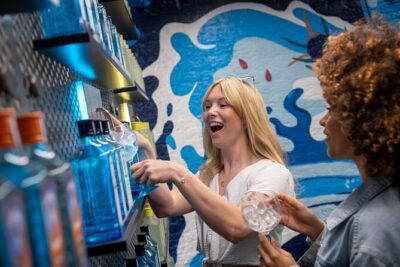
Bombay Sapphire Gin Distillery Tour and Cocktail
Read our review →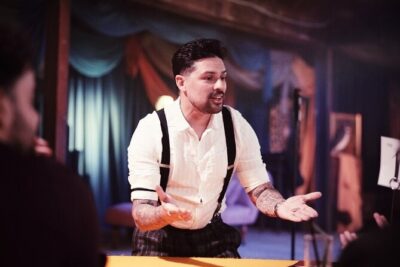
Immersive Magic Experience with Craft Cocktails in London
Read our review →
Bombay Sapphire Gin Cocktail Masterclass and Tour
Read our review →
Browse the lists this tour appears in